
Next-Generation Aquaculture: The Future of Fishing on Planet Earth
 |
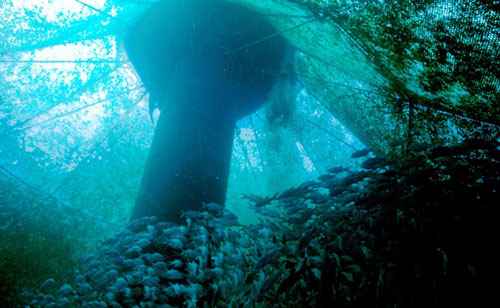
| This next-generation land-based recirculating aquaculture facility in northern Denmark supplies 20 percent of the eel consumed by the European market. (Photo courtesy of Aquaculture Developments, LLC) |
After being nearly ignored for decades, marine conservation issues are increasingly at the forefront of the environmental agenda today, thanks in large part to the report of the U.S. Commission on Ocean Policy and subsequent U.S. Ocean Action Plan as well as the results of the independent Pew Oceans Commission, and current actions of the Joint Ocean Commission Initiative. The similarity of the findings of these efforts has been striking, recognizing that urgent steps are required to restore marine ecosystems. Among the most serious problems cited is overfishing and the recognition that U.S. fisheries are increasingly unsustainable and many populations will take decades to recover.
Of course, this trend is not limited to the U.S. and global overfishing is viewed as one of the principal causes of the loss of integrity of marine ecosystems and is considered a major factor in the decline of coral reef communities.
There is increasing recognition that sustainable aquaculture can play a key role in the transition toward safer, more environmentally and economically sustainable seafood production, offering a viable and sustainable alternative to fishing wild stocks and one that can bring strong economic benefits.
 |
|
Next-generation facility growing barramundi in Malaysia. Such systems are based on land, completely enclosed, recirculate 97-99% of their effluent, and are more than 10 times more efficient than open pond systems. (Photo courtesy of Aquaculture Developments, LLC)
|
Land-based, next-generation closed-loop recirculating aquaculture systems (represented in the Americas by companies such as Aquaculture Developments, LLC) offer a unique combination of conservation achievements, socioeconomic benefits, and potential for scalability. Such technology could lead the way toward a revolutionary transition of fish production in the U.S., the Americas and the world, leading to the large-scale “domestication” of fish just as has been done for many centuries with terrestrial animals.
Next-generation recirculating aquaculture systems represent a key, if not central part of the solution to meet future demand for protein from the sea while reducing and eventually eliminating the overfishing of wild fish stocks. This is because they excel across a broad range of environmental and socioeconomic issues where other forms of aquaculture fall short:
- Water Pollution: Land-based recirculating systems recycle 97-99% of their water and create virtually no discharge (including nutrients, chemicals) to natural water bodies, either marine or fresh water.
- Coastal Habitat Alteration, Destruction: Unlike coastal systems, especially shrimp farming practices, recirculating systems are inland-based and have no impact on coastal habitats.
- Disease: As a closed system allowing no contact with natural populations, coupled with strict protocols for disease detection, prevention and control, there is virtually no risk of introducing disease to the natural environment from closed-loop recirculating systems.
- Escapement: Again, as a closed system with no contact with natural waters, recirculating systems eliminate risk of farmed populations mixing with wild populations.
- Use of Antibiotics, Chemicals: In accordance with strict operating protocols, no antibiotics or chemicals are used in raising farmed fish in either UNI-Aqua or Fish Protech systems.
- Use of Fish Meal in Feed: Even today’s state-of-the-art aquaculture facilities are unable to completely eliminate fish meal as a dietary component for predatory/piscivorous finfish. This is an issue that will necessarily be resolved over the coming years and is a challenge that affects all forms of aquaculture. However, closed systems have one profound advantage over ponds and other open (flow-through) aquaculture systems in this regard: Tremendous efficiency. Because closed systems exercise complete control over their environment, they realize food conversion efficiencies and growth rates more than 10 times higher than comparable open systems, meaning that less than 1/10th the feed is required per unit of biomass of fish in closed systems. This, of course, means that less than 1/10th of wild-caught fish are needed to supply the fish meal fraction of the feed. Food conversion ratios of less than 0.8 have been demonstrated for barramundi and halibut, among others, in climates ranging from tropical to northern temperate.
- Profitability: Increasingly, the conservation community is aware that sustainable conservation and economics go hand-in-hand. Unless economic benefits can be demonstrated for an environmental solution, serious barriers to implementation will exist. The fact that land-based recirculating systems have demonstrated consistent profitability (and at a significant level of return) in Asia and Europe means that this type of technology has the strongest chance of moving forward.
- Community/Local Benefits/Scalability: Conservation often means helping communities solve problems in their own back yards. Land-based recirculating technologies are scalable, and therefore can be introduced to many different types of communities ranging from rural agricultural to urban brownfields. Helping local communities advance through a sustainable “locally grown” enterprise such as this is a goal that conservationists, business leaders and political leaders share.
INDONESIA . 1planet3oceans = 1planet1ocean = ” End of the line ” for marine life ?
Let’s hope not, Israel have been moving ahead with Fish Farms in the desert with aquaculture recirculating systems technology. So, there is a chance that we can still have fish for the future generation. Let all developed countries do their homework now, not just finding new aquaculture technology, but most of all is to establish new recirculating aquaculture farms before the ocean fish run-out.