
Cuba’s Gardens of the Queen: An Unforgettable Learning Adventure
Travel to Cuba under this program is legal for U.S. citizens and residents. Ocean Doctor is licensed by the U.S. Treasury Department for educational programs to Cuba and we work to ensure that all activities are in full compliance with U.S. Treasury regulations. Under the U.S. economic embargo of Cuba, travel to Cuba by U.S. citizens for tourism is prohibited. However, licensed “people-to-people” educational visits are permitted.
Ocean Doctor’s Cuba Educational Experiences Program examines the relationship of Cuban citizens with their natural environment, including burgeoning socioeconomic and cultural issues brought about by Cuba’s growing ecotourism industry. The exchange also represents an opportunity to explore important environmental issues that impact the marine waters that both nations share through face-to-face interaction. The environment, and particularly the marine environment, is something that both biologically and culturally joins Cuba and the U.S. and the exchanges build upon the strong relationships Ocean Doctor has forged through since 2000 through its scientific research programs in Cuba. Visitors will meet with Cuban scientists, resource managers, ecotourism professionals and community members. 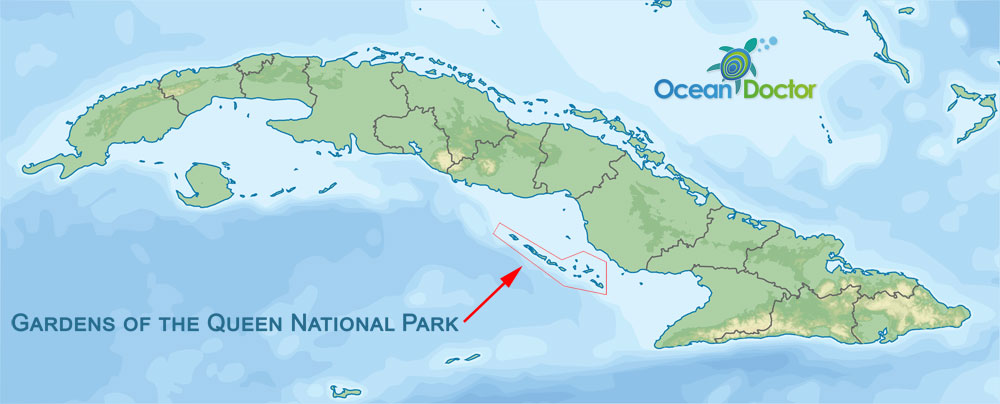 Six days of this 11-day/10-night trip will be spent aboard a floating hotel or liveaboard dive vessel in the heart of Cuba’s Gardens of the Queen (Jardines de la Reina) National Park, located 60 Miles off the southern coast of Cuba, an archipelago comprising a chain of 250 virgin coral and mangrove islands extending along 75 miles of turquoise waters.
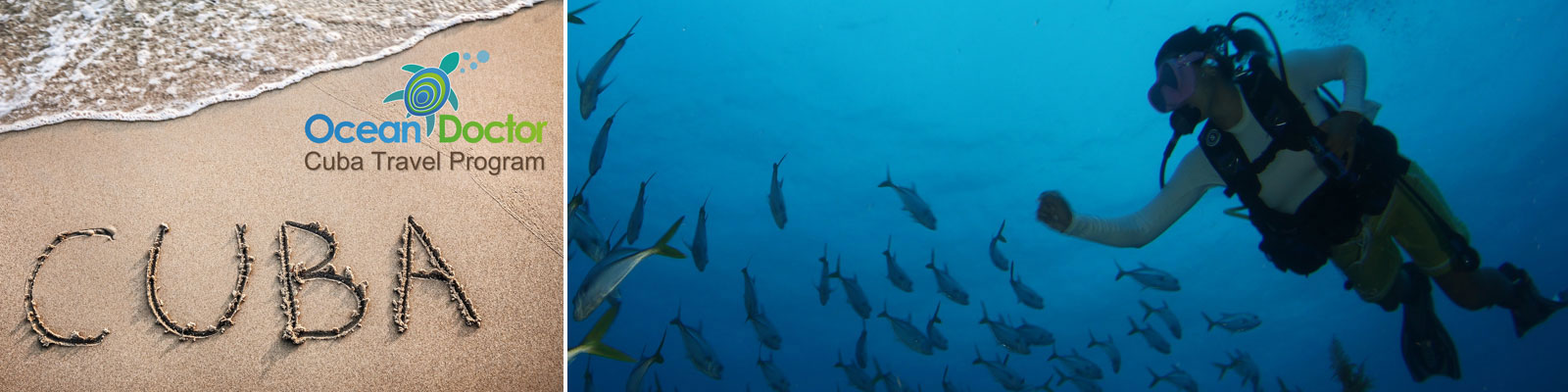
Gardens of the Queen was recently featured on an award-winning segment of the CBS news program, 60 MINUTES hosted by Anderson Cooper. Gardens of the Queen is Cuba’s first marine park and the largest no-take marine reserve in the Caribbean, where much of the story lies underwater. U.S. visitors will accompany Cuban specialists and be able to scuba dive in one of the healthiest marine ecosystems remaining in the Caribbean. Space is limited. Visitation to Cuba’s Gardens of the Queen is limited to only 1,000 divers per year by the Cuban government. All trips are led by Dr. David E. Guggenheim, president of Ocean Doctor and Cuba Conservancy director and/or experienced Ocean Doctor representatives. Your travel helps support our work!
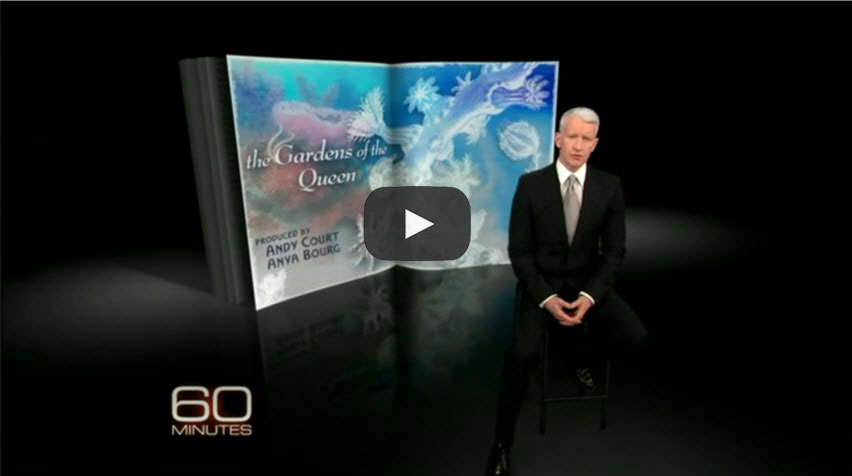
 Our work in Cuba’s “Gardens of the Queen” was featured on an award-winning segment of the CBS news program, 60 Minutes hosted by Anderson Cooper.

Awards and Accolades

Outside Magazine awarded Ocean Doctor’s trips to Cuba’s Gardens of the Queen its BEST DIVE award for 2015!
Ocean Doctor’s trips to Cuba were the cover story in Scuba Diving Magazine!

Gardens of the Queen National Park was voted BEST MARINE PARK 2014 in Scuba Diving Magazine!

See reviews at Trip Advisor

Our trip to Havana and The Gardens of the Queen exceeded my expectations! The Cuban people were warm and welcoming to us all. Our educational programs totally raised my awareness of the beauty and importance of keeping our reefs healthy. To be able to dive in pristine and virginal waters opened my eyes further to how we can improve the reefs throughout the world. I hope that David and Ocean Doctor can continue these programs to others. The story truly lies underwater! Thank you
See more testimonials below
Book Your Educational Experience

For the time being Ocean Doctor has suspended its educational experiences in Cuba’s Gardens of the Queen due to unreliability of our travel provider.
While we hope to resume trips in the future, we invite you to travel with us to some of Cuba’s other destinations, including the mysterious Isle of Youth.
For more information, please see our current Cuba Educational Experiences.
About the Gardens of the Queen
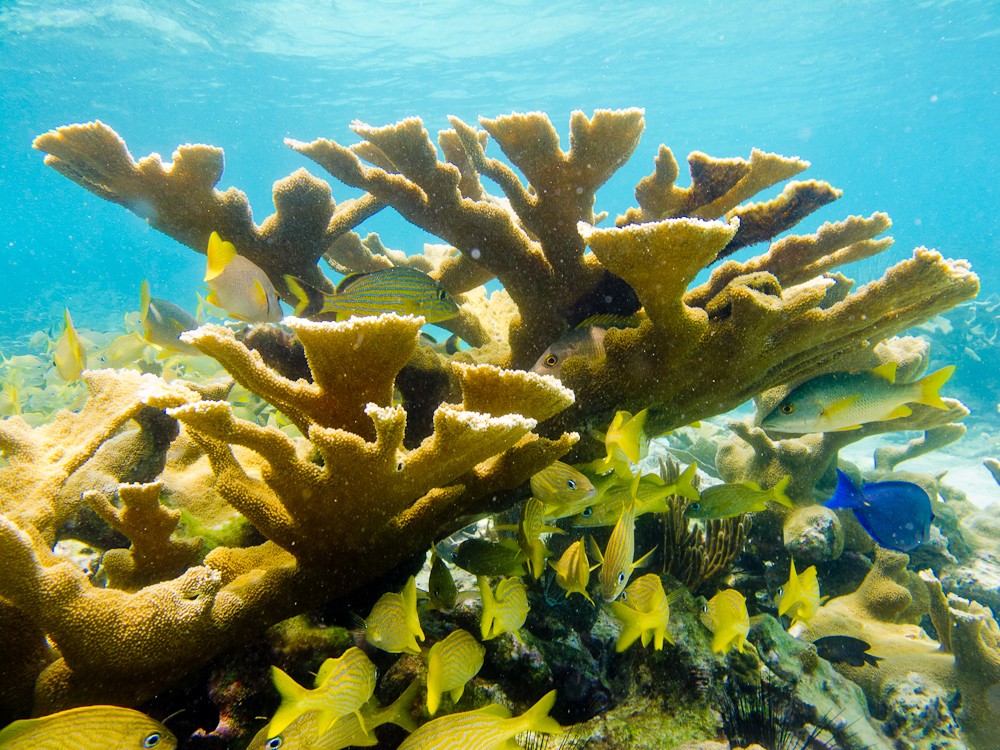
In a world where corals are dead and dying, the corals of Gardens of the Queen are thriving, including elkhorn coral (Acropora palmata) which has diminished by nearly 95 percent in the Caribbean over the past 40 years (Photo © David E. Guggenheim)
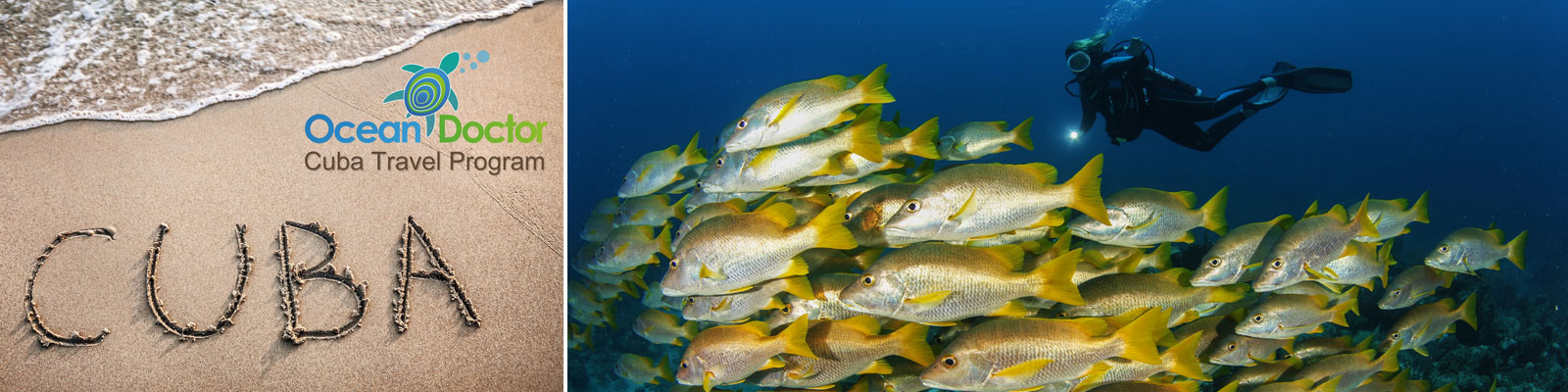
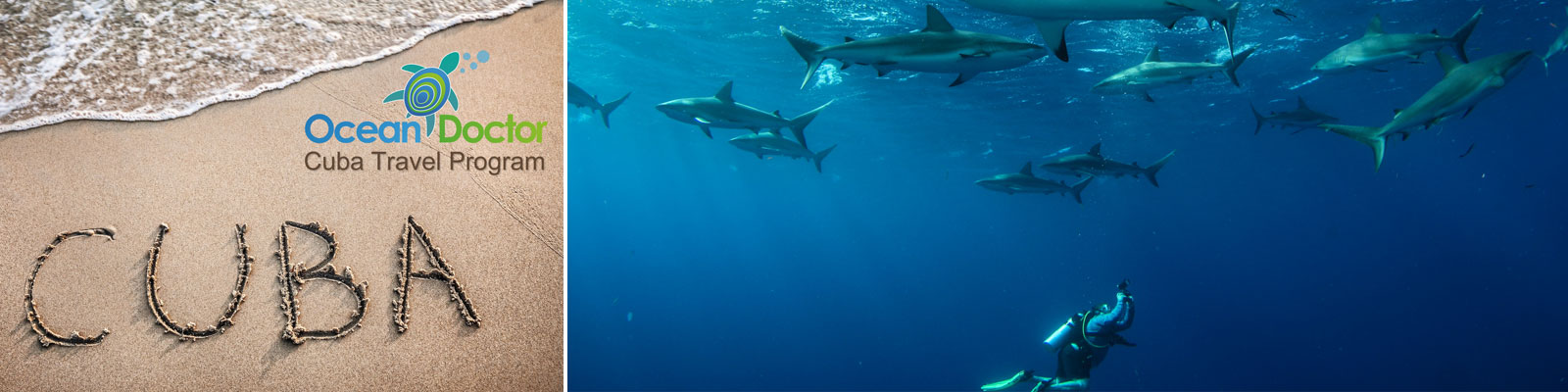
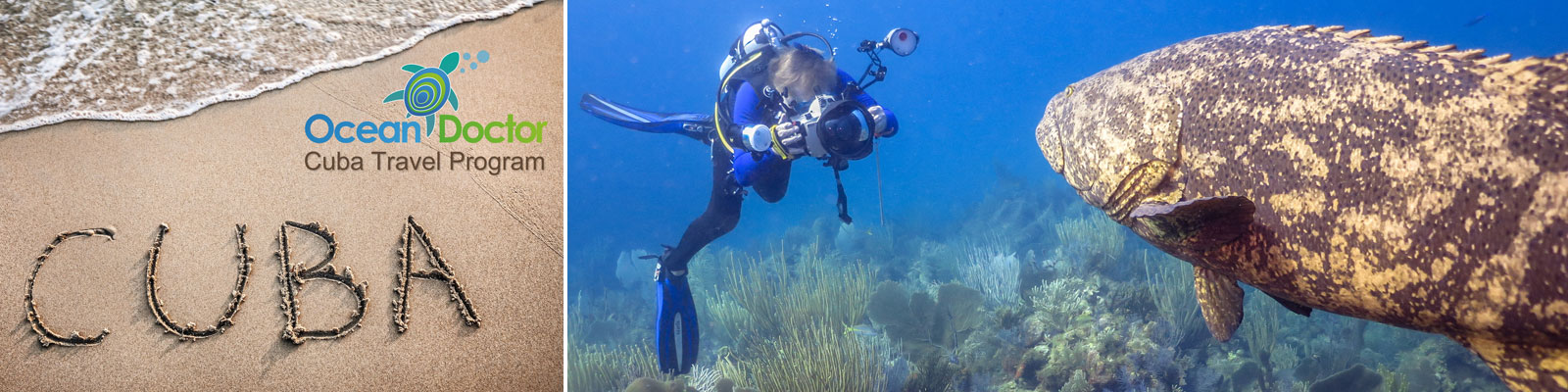
Jardines de la Reina or the “Gardens of the Queen” was named by Christopher Columbus to honor Queen Isabella of Spain and the area remains as spectacularly beautiful and wild as when Columbus experienced it over 500 years ago. Covering more than 837 square miles, Gardens of the Queen is one of the largest marine parks in the Caribbean and among the healthiest Caribbean marine ecosystems. Coral and fish populations appear remarkably healthy and abundant here in sharp contrast to other parts of the Caribbean. Myriads of robust fish populations include black grouper, bonefish and Cubera snapper. Even the critically endangered Nassau grouper and Goliath grouper are found in large numbers here. The area also harbors an abundant shark population, including silky sharks, Caribbean reef sharks and whale sharks.
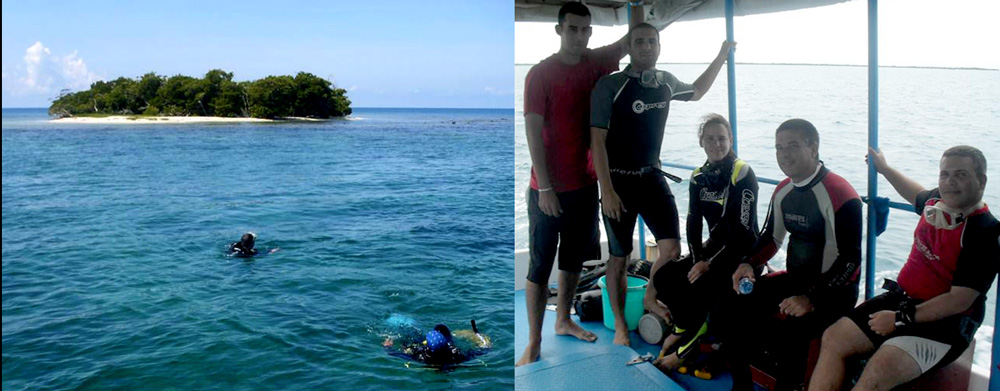
Our Cuban colleagues conducting research in the Gulf of Ana Maria, adjacent to the Gardens of the Queen
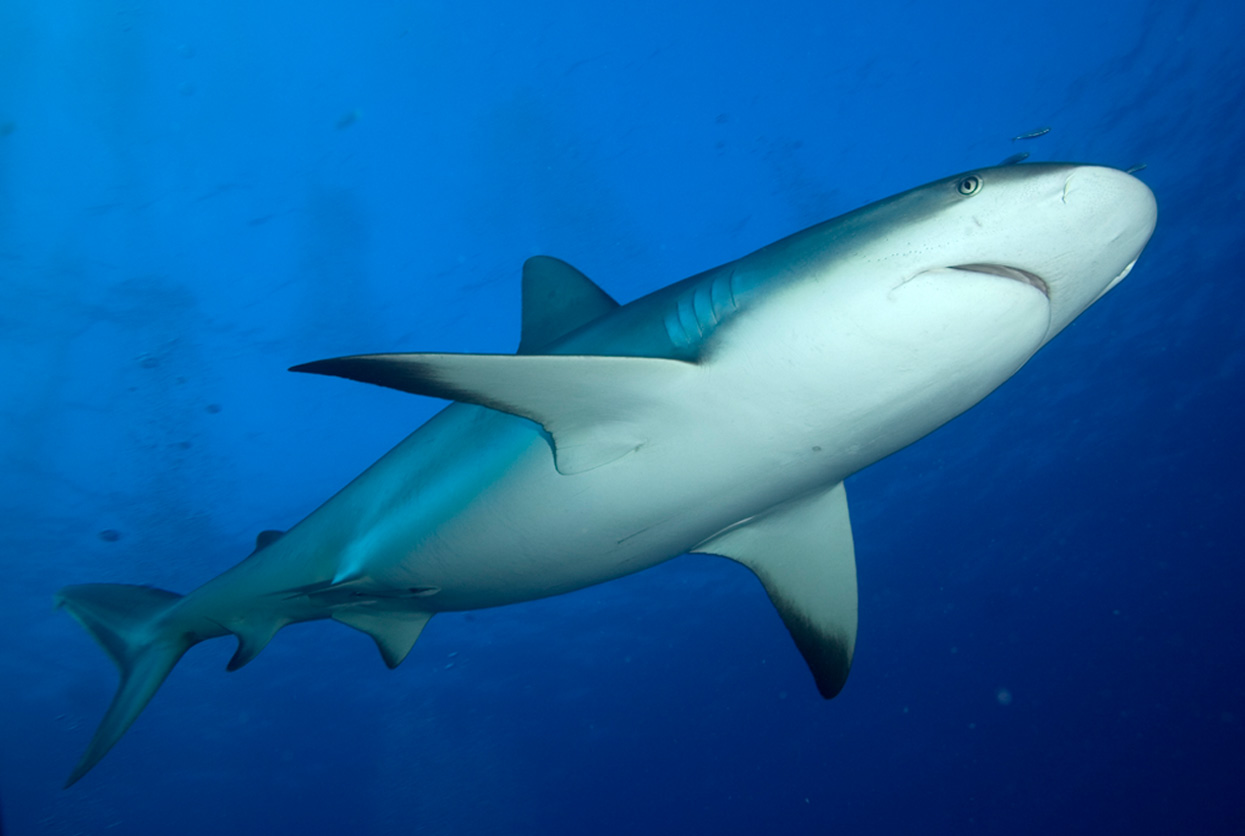
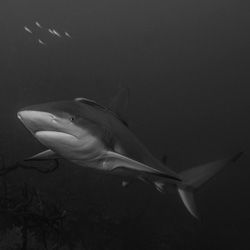
Top predators, including sharks – like this Caribbean reef shark – and grouper are abundant in Gardens of the Queen (Photo © Noel López)
Ocean Doctor is working with the Cuban Center for the Study of Coastal Ecosystems (Centro de Investigaciones de Ecosistemas Costeros, CIEC) and the University of Havana’s Center for Marine Research (Centro de Investigaciones Marinas, CIM) to study this unique ecosystem and its surrounding “life support systems,” such as the virtually unexplored Gulf of Ana Maria, in order to better understand why these marine ecosystems have been able to thrive in a world of corals that are dead and dying. We are also working with our Cuban partners to assess the economic and social value of such a healthy ecosystem.
Finally, we are working to research and protect the unique and pristine ecosystems of Jardines de la Reina in order to ensure that these protections will endure in perpetuity, serve as a compelling model for marine protected areas worldwide, dramatically advance human understanding of how healthy coral reef ecosystems function, and yield critical insights to inform management decisions for protecting coral reefs globally.
Frequently Asked Questions (FAQ)
For the time being Ocean Doctor has suspended its trips to Cuba’s Gardens of the Queen due to unreliability of our travel provider.
While we hope to resume trips in the future, we invite you to travel with us to some of Cuba’s other destinations, including the mysterious Isle of Youth.
For more information, please see our current Cuba Travel Program information.
About Us

Ocean Doctor is a nonprofit organization based in Washington, DC. Our mission is to advance the conservation of the world’s oceans through scientific research, education and community engagement. Our Cuba Conservancy Program is built on more than 16 years of experience working in Cuba. 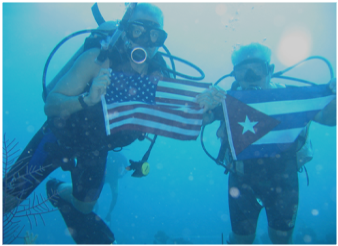 At the core of Cuba Conservancy’s mission is to establish sustained collaboration between Cuba and the United States to:
- ensure enduring, locally-supported marine research and conservation programs in Cuba.
- contribute to major advances in the scientific understanding of Cuba’s natural resources.
- achieve meaningful, long-lasting conservation for Cuba’s marine ecosystems and shared ecosystems of the Gulf of Mexico.
- forge long-term collaborative relationships with our Cuban colleagues.
- help train the next generation of Cuban marine scientists.
The program builds upon a strong foundation of scientific research. Research not only serves the purpose of advancing science and informing conservation policy efforts, but also helps forge strong, long-term collaborative relationships and credibility, facilitating efforts in the policy arena.
Testimonials
Our Ocean Doctor sponsored trip to Gardens of the Queen in Cuba exceeded all expectations. Lodging and transportation arrangements In Havana along with the educational component and guided tours made the land based days interesting and well worth while. The diving experience was almost beyond belief! Imagine what Caribbean marine life was like 50 or 100 years ago, that’s what you’ll see in the Gardens of the Queen.
As the icy Cold War between the USA and Cuba begins to thaw, we feel very privileged to have traveled with Ocean Doctor to Havana and Garden of the Queens. Every person we met — hosts, land and sea guides, guests speakers — evidenced a great measure of knowledge, kindness and care. The commentary by the tour guides, the discussions with speakers, and of course, the diving, all exceeded our expectations. Hope to return again as soon as time and tides allow.
Our trip to Havana and The Gardens of the Queen exceeded my expectations! The Cuban people were warm and welcoming to us all. Our educational programs totally raised my awareness of the beauty and importance of keeping our reefs healthy. To be able to dive in pristine and virginal waters opened my eyes further to how we can improve the reefs throughout the world. I hope that David and Ocean Doctor can continue these programs to others. The story truly lies underwater! Thank you
Cuba lingers…in your heart and soul……! A most memorable and amazing journey to a land where time has stood still. it was so refreshing to see and interact with a vibrant, energized and happy but hard working people willing to share with you their stories, their art, their passions, their hopes for the future. The sight of horse drawn carriages in the countryside and ’50s vintage cars in the city was such a delight! It was equally wonderful not to see western franchises, commercial billboards, people talking or texting on cellphones. Instead, there was music everywhere and lovely people willing to share their experiences in engaging conversation. What a novel concept! Thanks to Ocean Doctor for making this possible and for Erika, who was the most fearless of leaders! …I have traveled around the world and few places have touched me as deeply as Cuba and its smiling, generous, resourceful and kind people. It is a unique place that awakens all the senses, touches the soul, and puts you back in touch with humanity. i would return in a heart beat!

I was on the first “people to people” trip with diving to Gardens of the Queen with David and some of the finest dive industry experts. This 11 day/10 night program is an excellent combination of education, diving and culture. The interaction with the top Cuban Marine biologists and conservationists was very informative. The diving at Gardens of the Queen is the finest Caribbean diving with unique, up close shark interactions and huge quantities of fish living in a balanced and fully protected marine eco system. And the touring of Havana and other parts of Cuba was memorable and eye opening. The Avalon II live aboard will be finished in March, 2014 and appears to be on track to be one of the finest floating hotels in Cuba if not the world.

I was honored to be invited along on the first trip to Cuba that Ocean Doctor now conducts as a person-to-person, cultural and educational program. I must say that the journey fulfilled all three of those criteria, allowing us to meet and converse with a wide range of Cuban citizens and learn about their history, daily lives and their work to conserve both the marine and land environments. The diving we were privileged to experience in The Gardens of the Queen was simply phenomenal. I’ve dived all over the Caribbean but have never seen the health and diversity in the total marine environment than I saw there. Cuba and Ocean Doctor are doing amazing things to preserve our oceans for future generations.

Just returned from Ocean Doctor’s People-to-People expedition to Cuba, and what a great experience!! The people were friendly and open. We had unlimited access to marine biologists, researchers, and environmental economists, who all gave excellent presentations on Cuba’s marine environment. And the diving in Gardens of the Queen was absolutely outstanding. Can’t remember the last time I saw such prolific schools of fish and tarpon. There were sharks (caribbean reef, silkys, nurse) on every dive and the staff and crew were fabulous!! Thank you David G. for all your hard work in opening up this beautiful country and it’s marine environment to us!!
I just wanted to personally thank you for organizing and leading our group to Cuba. Larry and I had such a memorable time, getting to see and interact with the Cubans and diving the Jardines de la Reina. This was the trip of a lifetime for us, and I am so impressed with your knowledge and commitment to making the experience so enjoyable. Your passion to Cuba and our future with them is extraordinary!