
• Link to X
  • Link to Facebook
  • Link to LinkedIn
  • Link to Youtube
  • Link to Instagram
  • Link to Pinterest
  • Link to Rss this site
Ocean Doctor
  • About
    • About Us
    • History
    • Board of Directors
      • Dr. Sylvia A. Earle
      • Adam Ravetch
      • Robert Frank
      • Advisory Council
    • Our Team
      • Dr. David E. Guggenheim – President
      • Mary Kadzielski – Program Consultant
      • Sophia Marencik – Conservation Policy Intern
      • Taylor Gordon – Intern
      • Cassidy Haney – Intern
      • Christina Riemer – Intern
      • MJ Hendren – Intern
    • Press
      • Ocean Doctor in the News
      • Media Kit
      • Press Releases
    • Contact
      • Contact Us
      • Submit a Question About Our Cuba Travel Program
      • Subscribe to Our Newsletter
      • Social Media
  • Our Work
    • Cuba Conservancy Program
      • About
      • Considering the Economic Value of Cuba’s Natural Ecosystems
      • Project “Red Alerta”
      • CUSP – The Cuba-U.S. Sustainability Partnership
      • Cuba Environmental Film Festival
      • Cuba Educational Travel
      • Animal Rescue in Cuba
      • More…
    • 50 States Expedition
      • About
      • Adopt a State!
      • Articles
    • Penguin Conservation
      • About
      • Our Film: Disaster at Nightingale
      • Articles
    • Animal Rescue in Cuba
    • More…
      • Protecting the Bering Sea Canyons
      • Sustainable Aquaculture
      • Expeditions
        • Cape to Cape Expedition
          • Articles
          • Track
        • Bering Sea Expedition
          • Articles
          • Track
        • The Ocean Doctor Radio Show
          • Listen Now
          • Subscribe with iTunes
  • News
    • Featured
    • Ocean Doctor in the News
    • Ocean Doctor’s Reflections
    • Action Alerts
    • The Ocean Doctor Radio Show
  • Events
    • Upcoming Events
    • Events Calendar
    • Past Events
    • Book a Speaker for Your Event
  • Travel With Us
    • Travel Opportunities
    • Registration
  • Book a SpeakerDr. David E. Guggenheim is a marine scientist, ocean explorer, submarine pilot, and conservation policy leader based in Washington, DC at The Ocean Foundation where he serves as Senior Fellow and Director of its Cuba Marine Research and Conservation Program. He also hosts The Ocean Doctor Radio Show. Dr. Guggenheim was inducted into the Explorers Club as a National Fellow in 2008. An accomplished public speaker, Dr. Guggenheim offers a unique perspective ? from a tiny submarine 2,000 feet beneath Alaska’s Bering Sea to the hallways of Washington, DC ? on the wonder of the oceans around us and the critical issues they now face. In early 2009, Dr. Guggenheim embarked on a special ?expedition? to deliver speeches to tens of thousands of students in all 50 U.S. states, the Ocean Doctor’s ?50 Years ? 50 States ? 50 Speeches? Expedition. In Washington, DC, Dr. Guggenheim is a leader in conservation policy, on important issues including global warming, coral reefs, sustainable seafood, and environmental education and is actively involved in international environmental issues. Read Dr. Guggenheim’s full biography? ? Dr. Guggenheim is a regular spokesperson on ocean issues and has been featured on ABC’s Good Morning America, CNN, MSNBC, BBC,?
  • Support Us
    • Make a Donation
    • Ocean Doctor Gear
  • Click to open the search input field Click to open the search input field Search
  • Menu Menu
Blog - Latest News

Plastic Bag Bans Aren’t the End of the World, Just Ask Edmonds
December 21, 2010/in Ocean Newswire/by Newswire

Single-use plastic bag bans aren’t the end of the world, as the plastic lobby would have us believe.

They do, however, prevent wastes from floating to the end of the world.

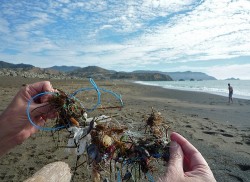
Plastic bags are made to last forever, yet they are marketed for single use. Ironic? Perhaps. Problematic? Definitely. Especially for those places where even that single use has never been put into affect the oceans and remote shorelines of the world. Here, plastic is not made, bought or sold. It simply arrives. And never leaves.

Throughout October and culminating on November 6th, some of the world’s experts and motivated activists on plastic pollution and marine conservation will be presenting their stories in a worldwide TEDx event: The Great Pacific Garbage Patch. But, their focus stretches beyond the Pacific to encompass the global nature of this modern crisis. Already, the videos posted present some disturbing perspectives on just how prevalent and persistent this problem has become.

Researchers and artists on Midway Atoll, for example, demonstrate how every wave that laps the shore leaves a necklace of gaudy fragments encircling the island in concentric strands that mark the tides. This effort is part of a larger initiative to document the devastating consequence of our disposable culture on albatross. It’s a spookily realistic example of the butterfly effect: how single, daily decisions to use and dispose of plastic can be linked to the mass-starvation of one of the mightiest and legendary creatures on the planet.

The chances that we can actually trace a lighter inside the rib cage of a dead baby albatross on Midway Atoll to the smoker who tossed it somewhere in Japan or California are as scant as our ability to trace a tornado in Texas back to the flapping of a butterfly’s wings in Brazil.? But, there is no denying the connection is there. And it extends beyond birds to affect the entire food web of the ocean, the beauty of beaches, the health and safety of our food supply.

So, the question remains, what can we do to turn the tide?

To clean up the mess is nearly impossible, especially since the size of most plastic particles are no bigger than grains of sand: any net that scoops them up will also remove lots of microorganisms that are critical to life in the sea. What we can do is stop making the problem worse: Americans alone toss 100 billion bags each year, equivalent to 12 million barrels of oil.

This August, the city of Edmonds in Oregon Washington took a giant leap forward by banning the use of plastic bags in all stores. There has been no major fall out, with customers and businesses adjusting to the ordinance calmly, effectively and quickly. It seems they weren’t tricked by the the American Chemistry Council, who poured millions into campaigns to block such bans. The ACC’s scare tactics worked to turn Californians into cowards this fall and to prevent Seattle’s first initiative to tax plastic bag use.

The example of Edmonds shows there is nothing scary about banning plastic bags. Sign this petition to let the members of Seattle’s Council know it is time they stopped being such scaredey-cats. You can also learn more about how to initiate legislation in your own community by checking out the Plastic Pollution Coalition web site.

Photo credit: Ingridtaylor

Follow Change.org’s Environment page on Facebook and Twitter.


Change.org’s Environment Blog: Oceans

Note: Newswire stories are provided as a courtesy of OceanDoctor.org. Content of these articles is provided by external sources.

Tags: Aren't, Bans, Edmonds, Just, plastic, world
Share this entry
  • Share on Facebook
  • Share on X
  • Share on WhatsApp
  • Share by Mail
https://oceandoctor.org/wp-content/uploads/2015/04/Ocean-Doctor-Logo_w340.png 0 0 Newswire https://oceandoctor.org/wp-content/uploads/2015/04/Ocean-Doctor-Logo_w340.png Newswire2010-12-21 12:35:172013-01-24 20:21:21Plastic Bag Bans Aren’t the End of the World, Just Ask Edmonds
You might also like
Learn how you can reduce your plastic waste from bottled water while saving money What Everyone Should Know About Bottled Water
Ocean Acidification Changes Nitrogen Cycling in World Seas (ScienceDaily.com)
Oceans of Garbage Infographic Infographic: Oceans of Garbage
Study: More Than 90 Percent of Dead Pacific Northwest Seabirds in Pacific Northwest Had Ingested Plastic
0 replies

Leave a Reply

Want to join the discussion?
Feel free to contribute!

Leave a Reply Cancel reply

You must be logged in to post a comment.

Make a Difference

See Us On:

Book a Speaker!

Book Dr. David E. Guggenheim, the

Subscribe to Our Newsletter

* indicates required
Phone: +1 (202) 695-2476
Fax: +1 (202) 888-3329
Mailing Address:
P.O. Box 53090
Washington, DC 20009

Just Released: The Remarkable Reefs of Cuba: Stories of Hope from the Ocean Doctor by Dr. David E. Guggenheim, President of Ocean Doctor

© Copyright - Ocean Doctor
  • Link to X
  • Link to Facebook
  • Link to LinkedIn
  • Link to Youtube
  • Link to Instagram
  • Link to Pinterest
  • Link to Rss this site
Link to: Ocean Acidification Changes Nitrogen Cycling in World Seas (ScienceDaily.com) Link to: Ocean Acidification Changes Nitrogen Cycling in World Seas (ScienceDaily.com) Ocean Acidification Changes Nitrogen Cycling in World Seas (ScienceDaily.co... Link to: PBS “Nature” 2010-11 Premiere Features Dr. David E. Guggenheim’s Work in Cuba Link to: PBS “Nature” 2010-11 Premiere Features Dr. David E. Guggenheim’s Work in Cuba Cuba: The Accidental Eden - 2010-11 Premiere Episode of PBS Series, "Nature"PBS “Nature” 2010-11 Premiere Features Dr. David E. Guggenheim’s...
Scroll to top Scroll to top Scroll to top