• Link to X
  • Link to Facebook
  • Link to LinkedIn
  • Link to Youtube
  • Link to Instagram
  • Link to Pinterest
  • Link to Rss this site
Ocean Doctor
  • About
    • About Us
    • History
    • Board of Directors
      • Dr. Sylvia A. Earle
      • Adam Ravetch
      • Robert Frank
      • Advisory Council
    • Our Team
      • Dr. David E. Guggenheim – President
      • Mary Kadzielski – Program Consultant
      • Sophia Marencik – Conservation Policy Intern
      • Taylor Gordon – Intern
      • Cassidy Haney – Intern
      • Christina Riemer – Intern
      • MJ Hendren – Intern
    • Press
      • Ocean Doctor in the News
      • Media Kit
      • Press Releases
    • Contact
      • Contact Us
      • Submit a Question About Our Cuba Travel Program
      • Subscribe to Our Newsletter
      • Social Media
  • Our Work
    • Cuba Conservancy Program
      • About
      • Considering the Economic Value of Cuba’s Natural Ecosystems
      • Project “Red Alerta”
      • CUSP – The Cuba-U.S. Sustainability Partnership
      • Cuba Environmental Film Festival
      • Cuba Educational Travel
      • Animal Rescue in Cuba
      • More…
    • 50 States Expedition
      • About
      • Adopt a State!
      • Articles
    • Penguin Conservation
      • About
      • Our Film: Disaster at Nightingale
      • Articles
    • Animal Rescue in Cuba
    • More…
      • Protecting the Bering Sea Canyons
      • Sustainable Aquaculture
      • Expeditions
        • Cape to Cape Expedition
          • Articles
          • Track
        • Bering Sea Expedition
          • Articles
          • Track
        • The Ocean Doctor Radio Show
          • Listen Now
          • Subscribe with iTunes
  • News
    • Featured
    • Ocean Doctor in the News
    • Ocean Doctor’s Reflections
    • Action Alerts
    • The Ocean Doctor Radio Show
  • Events
    • Upcoming Events
    • Events Calendar
    • Past Events
    • Book a Speaker for Your Event
  • Travel With Us
    • Travel Opportunities
    • Registration
  • Book a SpeakerDr. David E. Guggenheim is a marine scientist, ocean explorer, submarine pilot, and conservation policy leader based in Washington, DC at The Ocean Foundation where he serves as Senior Fellow and Director of its Cuba Marine Research and Conservation Program. He also hosts The Ocean Doctor Radio Show. Dr. Guggenheim was inducted into the Explorers Club as a National Fellow in 2008. An accomplished public speaker, Dr. Guggenheim offers a unique perspective ? from a tiny submarine 2,000 feet beneath Alaska’s Bering Sea to the hallways of Washington, DC ? on the wonder of the oceans around us and the critical issues they now face. In early 2009, Dr. Guggenheim embarked on a special ?expedition? to deliver speeches to tens of thousands of students in all 50 U.S. states, the Ocean Doctor’s ?50 Years ? 50 States ? 50 Speeches? Expedition. In Washington, DC, Dr. Guggenheim is a leader in conservation policy, on important issues including global warming, coral reefs, sustainable seafood, and environmental education and is actively involved in international environmental issues. Read Dr. Guggenheim’s full biography? ? Dr. Guggenheim is a regular spokesperson on ocean issues and has been featured on ABC’s Good Morning America, CNN, MSNBC, BBC,?
  • Support Us
    • Make a Donation
    • Ocean Doctor Gear
  • Click to open the search input field Click to open the search input field Search
  • Menu Menu
Blog - Latest News

Artificial Reefs: National Geographic Shows Us the Beauty, the Science & the Controversy

January 28, 2011/in Featured, News & Announcements/by Ocean Doctor
"From Relics to Reefs" can be found in the February 2011 issue of National Geographic magazine, on newsstands January 25, 2011

“From Relics to Reefs” can be found in the February 2011 issue of National Geographic magazine, on newsstands January 25, 2011

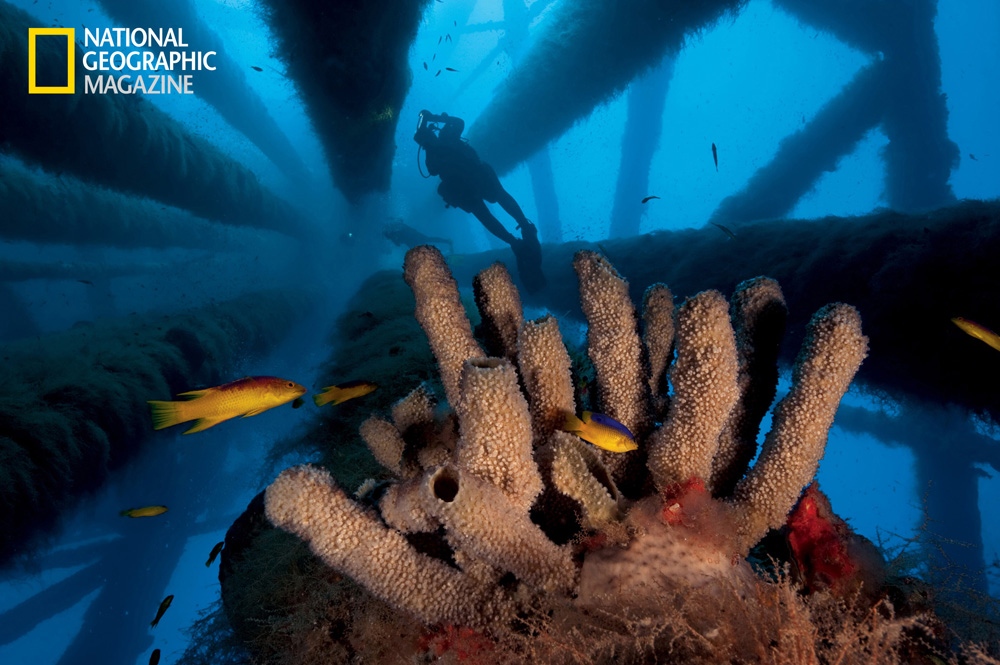
They’re favorites among divers and fishermen, they’re teeming with life, and they’re heralded as a way to rebuild dwindling fish populations. They’re also controversial. With the breathtaking imagery of renowned National Geographic photographer David Doubilet, the February 2011 issue of National Geographic Magazine brings us deep into the heart of the artificial reefs found throughout our ocean waters.

If you’ve ever been diving on an artificial reef — whether a shipwreck or pile of cinder blocks — the concentration of sea life is striking and mesmerizing. There’s no doubt that high concentrations of life are found around artificial reefs and that they play important roles economically for tourism as both diving and fishing destinations. But do they provide conservation benefits? Do artificial reefs result in a net increase in fish and other marine life, or do they merely concentrate the life that’s already there — and make it easier for fishermen to find it? As one highly-respected scientist put it, “Does it make sense that to create more fish we simply need to throw our trash into the ocean?” While it’s clearly an issue that requires more research, what doesn’t seem to be controversial is the fact that artificial reefs are visually stunning, and thanks to David Doubilet, we have a unique opportunity to visit the artificial reefs around us like never before.

People around the world have long known that shipwrecks are prime fishing sites, and since at least the 1830s, American fishermen purposely built artificial reefs out of interlaced logs. In our own time the materials of do-it-yourself reefs have tended to be castaway junk: old refrigerators, shopping carts, ditched cars, out-of-service vending machines. Pretty much anything you can sink has the potential to become an artificial reef. Even officially sanctioned ones are often created from distinctly odd materials, including decommissioned subway cars, vintage battle tanks, armored personnel carriers, oil drilling rigs, and specially designed beehive-like modules called Reef Balls.
– “From Relics to Reefs” National Geographic Magazine (February 2011)

[pb_slideshow group=”3″]
Photos by David Doubilet/National Geographic
Tags: artificial reefs, David Doubilet, national geographic, National Geographic Magazine, National Geographic Society, photography, underwater photography
Share this entry
  • Share on Facebook
  • Share on X
  • Share on WhatsApp
  • Share by Mail
https://oceandoctor.org/wp-content/uploads/2011/01/ArtificialReef_mm7740_06.jpg 665 1000 Ocean Doctor https://oceandoctor.org/wp-content/uploads/2015/04/Ocean-Doctor-Logo_w340.png Ocean Doctor2011-01-28 09:58:092013-01-09 18:16:19Artificial Reefs: National Geographic Shows Us the Beauty, the Science & the Controversy
You might also like
National Geographic Explorer in Residence, Dr. Enric Sala, exploring the world's last remaining pristine seas (Photo: Octavio Aburto) National Geographic’s Newest Explorer
The clownish grin of a bridled parrotfish reveals its power tools: grinding teeth used to scrape algae from rock. Though sometimes destructive to individual corals, the fish's efforts are mostly beneficial. Without them, algal growth could smother the reef. Scarus frenatus (Photo: David Doubilet/National Geographic) Getting to Know Your Neighbors Below the Surface
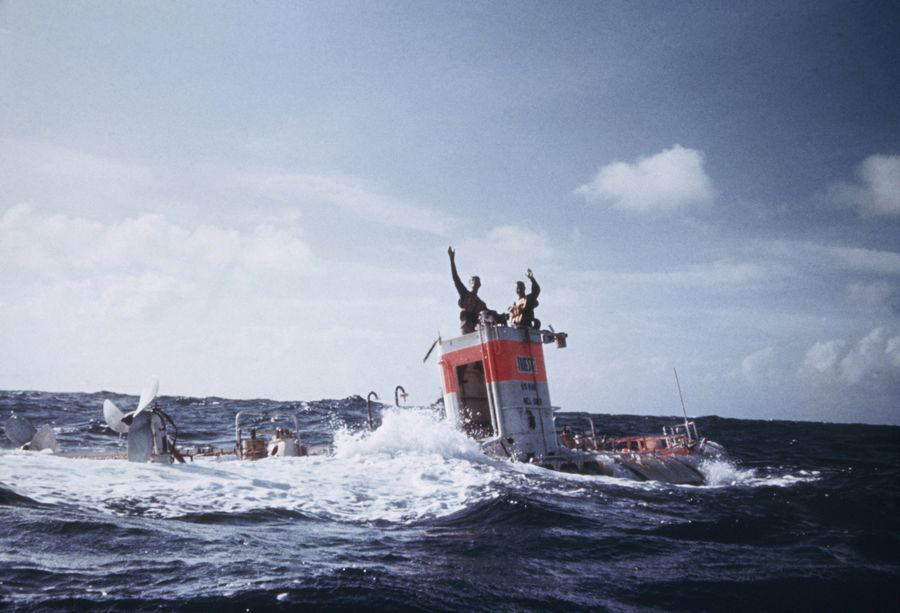
Jacques Piccard and Don Walsh emerge from the bathyscaphe Trieste following their successful descent to the bottom of the Pacific Ocean's Mariana Trench in January 1960. Walsh and Piccard were the first people to reach the trench's ? and Earth's ? lowest point, Challenger Deep, some 35,800 feet below the ocean surface. Piccard, who died in 2008, was posthumously awarded the Hubbard Medal, the National Geographic highest honor, at a ceremony in Washington, D.C., on June 14, 2012 (Photo: Thomas J. Abercrombie; ? National Geographic) With DEEPEST Gratitude to Jacques Piccard, National Geographic Bestows its Highest Honor
Chef Barton Seaver Eating Our Way Out of the Ocean’s Problems — A Chef’s Perspective
The clownish grin of a bridled parrotfish reveals its power tools: grinding teeth used to scrape algae from rock. Though sometimes destructive to individual corals, the fish's efforts are mostly beneficial. Without them, algal growth could smother the reef. Scarus frenatus (Photo: David Doubilet/National Geographic) Wild and Crazy: A Worm Named Bob Marley and the Fish With a See-Through Head
The clownish grin of a bridled parrotfish reveals its power tools: grinding teeth used to scrape algae from rock. Though sometimes destructive to individual corals, the fish's efforts are mostly beneficial. Without them, algal growth could smother the reef. Scarus frenatus (Photo: David Doubilet/National Geographic) A Fragile Empire: National Geographic Examines Threats to Australia’s Great Barrier Reef
1 reply

Leave a Reply

Want to join the discussion?
Feel free to contribute!

Leave a Reply Cancel reply

You must be logged in to post a comment.

Make a Difference

See Us On:

Book a Speaker!

Book Dr. David E. Guggenheim, the

Subscribe to Our Newsletter

* indicates required
Phone: +1 (202) 695-2476
Fax: +1 (202) 888-3329
Mailing Address:
P.O. Box 53090
Washington, DC 20009

Just Released: The Remarkable Reefs of Cuba: Stories of Hope from the Ocean Doctor by Dr. David E. Guggenheim, President of Ocean Doctor

© Copyright - Ocean Doctor
  • Link to X
  • Link to Facebook
  • Link to LinkedIn
  • Link to Youtube
  • Link to Instagram
  • Link to Pinterest
  • Link to Rss this site
Link to: Chemical in Dispersants Endured Long After Gulf Oil Spill, Study Finds Link to: Chemical in Dispersants Endured Long After Gulf Oil Spill, Study Finds Chemical in Dispersants Endured Long After Gulf Oil Spill, Study Finds Link to: Sharp rise reported in Scots fish lice chemical (BBC) Link to: Sharp rise reported in Scots fish lice chemical (BBC) Sharp rise reported in Scots fish lice chemical (BBC)
Scroll to top Scroll to top Scroll to top