• Link to X
  • Link to Facebook
  • Link to LinkedIn
  • Link to Youtube
  • Link to Instagram
  • Link to Pinterest
  • Link to Rss this site
Ocean Doctor
  • About
    • About Us
    • History
    • Board of Directors
      • Dr. Sylvia A. Earle
      • Adam Ravetch
      • Robert Frank
      • Advisory Council
    • Our Team
      • Dr. David E. Guggenheim – President
      • Mary Kadzielski – Program Consultant
      • Sophia Marencik – Conservation Policy Intern
      • Taylor Gordon – Intern
      • Cassidy Haney – Intern
      • Christina Riemer – Intern
      • MJ Hendren – Intern
    • Press
      • Ocean Doctor in the News
      • Media Kit
      • Press Releases
    • Contact
      • Contact Us
      • Submit a Question About Our Cuba Travel Program
      • Subscribe to Our Newsletter
      • Social Media
  • Our Work
    • Cuba Conservancy Program
      • About
      • Considering the Economic Value of Cuba’s Natural Ecosystems
      • Project “Red Alerta”
      • CUSP – The Cuba-U.S. Sustainability Partnership
      • Cuba Environmental Film Festival
      • Cuba Educational Travel
      • Animal Rescue in Cuba
      • More…
    • 50 States Expedition
      • About
      • Adopt a State!
      • Articles
    • Penguin Conservation
      • About
      • Our Film: Disaster at Nightingale
      • Articles
    • Animal Rescue in Cuba
    • More…
      • Protecting the Bering Sea Canyons
      • Sustainable Aquaculture
      • Expeditions
        • Cape to Cape Expedition
          • Articles
          • Track
        • Bering Sea Expedition
          • Articles
          • Track
        • The Ocean Doctor Radio Show
          • Listen Now
          • Subscribe with iTunes
  • News
    • Featured
    • Ocean Doctor in the News
    • Ocean Doctor’s Reflections
    • Action Alerts
    • The Ocean Doctor Radio Show
  • Events
    • Upcoming Events
    • Events Calendar
    • Past Events
    • Book a Speaker for Your Event
  • Travel With Us
    • Travel Opportunities
    • Registration
  • Book a SpeakerDr. David E. Guggenheim is a marine scientist, ocean explorer, submarine pilot, and conservation policy leader based in Washington, DC at The Ocean Foundation where he serves as Senior Fellow and Director of its Cuba Marine Research and Conservation Program. He also hosts The Ocean Doctor Radio Show. Dr. Guggenheim was inducted into the Explorers Club as a National Fellow in 2008. An accomplished public speaker, Dr. Guggenheim offers a unique perspective ? from a tiny submarine 2,000 feet beneath Alaska’s Bering Sea to the hallways of Washington, DC ? on the wonder of the oceans around us and the critical issues they now face. In early 2009, Dr. Guggenheim embarked on a special ?expedition? to deliver speeches to tens of thousands of students in all 50 U.S. states, the Ocean Doctor’s ?50 Years ? 50 States ? 50 Speeches? Expedition. In Washington, DC, Dr. Guggenheim is a leader in conservation policy, on important issues including global warming, coral reefs, sustainable seafood, and environmental education and is actively involved in international environmental issues. Read Dr. Guggenheim’s full biography? ? Dr. Guggenheim is a regular spokesperson on ocean issues and has been featured on ABC’s Good Morning America, CNN, MSNBC, BBC,?
  • Support Us
    • Make a Donation
    • Ocean Doctor Gear
  • Click to open the search input field Click to open the search input field Search
  • Menu Menu
Blog - Latest News

Leading Ocean Scientists Issue Consensus Statement to End Dispersant Use in Gulf
July 26, 2010/in Featured, Gulf of Mexico, News & Announcements/by Ocean Doctor_
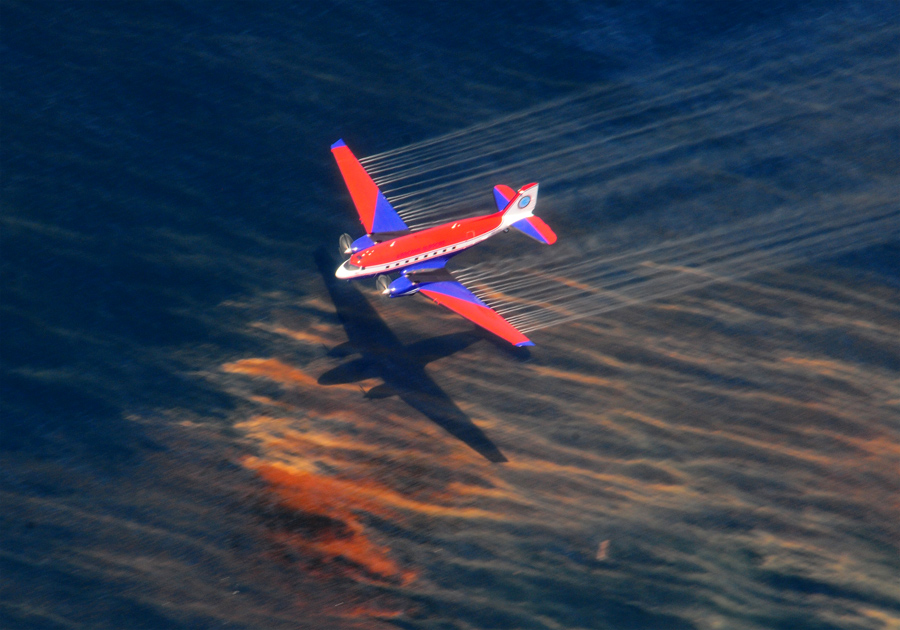
Chemical dispersants being released near Houma, Louisiana in the Gulf of Mexico (USCG photo)

Chemical dispersants being released near Houma, Louisiana in the Gulf of Mexico (USCG photo)

Leading ocean researchers and conservation leaders have issued a joint Consensus Statement calling for the immediate halt of the use of chemical dispersants in the Gulf of Mexico. BP has used nearly two million gallons of Corexit chemical dispersants in the Gulf of Mexico as part of the cleanup effort with support from the U.S. Environmental Protection Agency (EPA). The massive volume of dispersants and the way they have been applied — both on the surface and one mile below the surface — is unprecedented. Once oil is dispersed in deep water, it cannot be recovered.

The Deadly Truth About Dispersants in the Gulf
Hear the interview with marine toxicologist, Dr. Susan Shaw about chemical dispersants and their impact on the Gulf’s wildlife and human health

There has been growing concern about the negative impacts the dispersant/crude oil mix will have on both the marine ecosystem and human health has prompted leading ocean scientists to issue a consensus statement that urges a halt to any further dispersant use in the Gulf.

The statement, authored by Dr. Susan Shaw, Director of the Marine Environmental Research Institute, stands on a large body of research indicating that crude oil and dispersants are more toxic when they are combined than either oil or dispersants alone. The statement also calls for:

  • Full public disclosure of all the chemical ingredients in the Corexit formulations and full toxicity data on these chemicals in combination with oil.
  • Full public disclosure of information about adverse health effects and all monitoring and testing data collected by government agencies.
  • Immediate funding for independent research to fully assess toxic impacts on the ecosystem and human health.
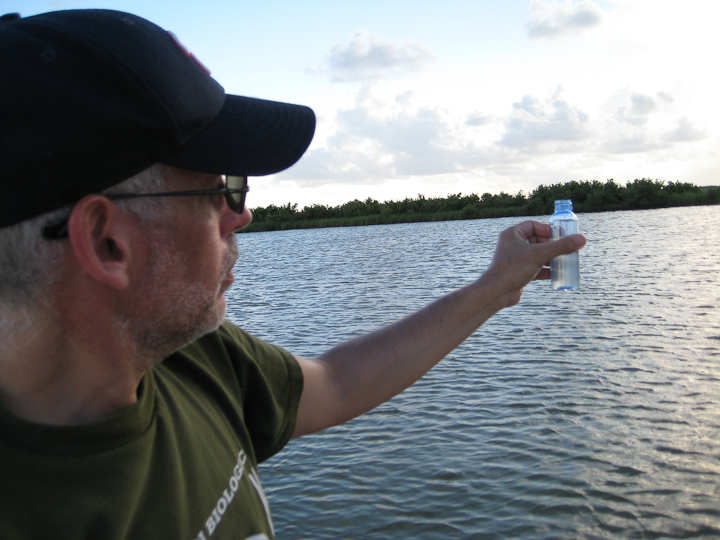
Dr. David E. Guggenheim takes water samples near Buras, Louisiana to be analyzed for toxins related to dispersants

1planet1ocean president, Dr. David E. Guggenheim, takes water samples near Buras, Louisiana to be analyzed for toxins related to chemical dispersants

The scientists believe the worst impacts of the disaster are yet to come, and without deliberate, independent scientific tracking and assessment, they could remain hidden.

Marine scientists and conservation organizations are invited to add their signatures to the document. Visit the Marine Environmental Research Institute for details.

Members of the public are invited to sign the public petition against the use of chemical dispersants.


Initial signatories include:

  • Sylvia A. Earle, PhD, Ocean Explorer-in-Residence, National Geographic Society; Advisory Council Chairman, Harte Research Institute
  • Susan D. Shaw, DrPH, Marine Toxicologist, Director, Marine Environmental Research Institute
  • Carl Safina, PhD, President, Blue Ocean Institute
  • David Gallo, PhD, Oceanographer, Woods Hole Oceanographic Institution
  • David E. Guggenheim, PhD, Marine Biologist/Conservationist, President, 1planet1ocean ? a project of The Ocean Foundation
  • Edith Widder, PhD, President and Senior Scientist, Ocean Research & Conservation Association
  • Wallace J. Nichols, PhD, Research Associate, California Academy of Sciences
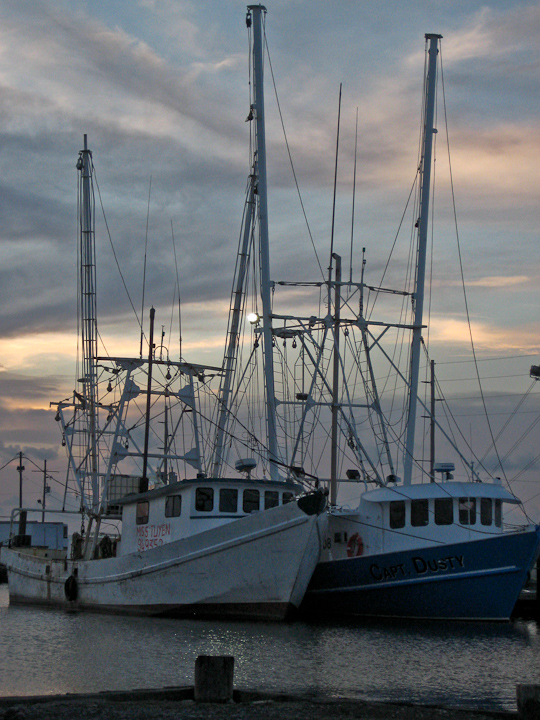
Idle fishing boats in Buras, Louisiana. Use of dispersants means more oil has been left in the ecosystem, which may ultimately accumulate in fish tissue, leaving an uncertain future for Gulf fisheries.

Idle fishing boats in Buras, Louisiana. Use of dispersants means more oil has been left in the marine ecosystem, which may ultimately accumulate in fish tissue, leaving an uncertain future for Gulf fisheries.

The rationale behind the use of the dispersant is to keep oil from the sensitive wetlands and coastlines. However, by dispersing the oil throughout the water column, this practice is making it impossible to recover the dispersed oil at the surface while plumes of the dispersed oil remain at depth, entering the food chain at many levels where it will bioaccumulate as it moves up the food chain. Dispersing the oil means more of it will likely travel with prevailing currents to destinations downstream, including Cuba, Mexico, the Florida Keys, and the eastern seaboard of the United States.

At a Senate hearing on June 15, 2010, EPA Administrator, Lisa Jackson stated, “In the use of dispersants we are faced with environmental tradeoffs” but also stated, “The long-term effects [of chemical dispersants] on aquatic life are largely unknown…” Without the critical information needed to make an informed, science-based tradeoff decision, the use of dispersants amounts to a large-scale, uncontrolled experiment on the Gulf of Mexico ecosystem that runs contrary to a precautionary approach, an experiment where the costs may ultimately outweigh the benefits.

Corexit is one of the most toxic dispersants and one of the least effective on Louisiana crude oil. However, it is the mixture of Corexit and oil that represents an even greater threat as the toxic effects are magnified. Corexit, designed to break down lipid layers, facilitates the movement of toxic materials across the membranes of wildlife and human beings. The dispersant-oil mixture is killing marine wildlife, including dolphins, whales and fish, while also causing a range of serious human health effects to those who have been exposed.

Download PDF

Download the Consensus Statement

PBS Newshour segment on dispersants, including interviews with Jean-Michel Cousteau and Dr. David E. Guggenheim


At a Senate hearing on June 15, 2010, EPA Administrator, Lisa Jackson stated, ?In the use of dispersants we are faced with environmental tradeoffs.? In fact, the use of dispersants does not represent a science-based, quantifiable ?tradeoff? but rather amounts to a large-scale experiment on the Gulf of Mexico ecosystem that runs contrary to a precautionary approach, an experiment where the costs may ultimately outweigh the benefits.

[pdf oceandoctor.org/downloads/Consensus-Statement-Dispersants_20100716.pdf 590 775]
Tags: bp, Corexit, dispersants, Gulf of Mexico, Louisiana, oil spill
Share this entry
  • Share on Facebook
  • Share on X
  • Share on WhatsApp
  • Share by Mail
https://oceandoctor.org/wp-content/uploads/2015/04/Ocean-Doctor-Logo_w340.png 0 0 Ocean Doctor_ https://oceandoctor.org/wp-content/uploads/2015/04/Ocean-Doctor-Logo_w340.png Ocean Doctor_2010-07-26 11:07:122013-01-09 18:57:41Leading Ocean Scientists Issue Consensus Statement to End Dispersant Use in Gulf
You might also like
The Great Penguin Rescue
The Ocean Revolution is Underway!
Disaster at Nightingale Island Historic Meeting Unites Cuba and the U.S., Taking Collaboration on Ocean Research & Conservation to a New Level
Disaster at Nightingale Island Cuba's Offshore Oil Development – Radio Discussion on NPR-WGCU
This Week's Guest: Roz Savage, Ocean Rower, Author, Speaker & Environmental Advocate Crossing the Ocean Solo with Your Bare Hands: Roz Savage – Part 1
Disaster at Nightingale Island Aboard the Cape to Cape Expedition: Disaster at Nightingale Island
2 replies
  1. S.Hartog
    S.Hartog says:
    August 19, 2010 at 5:11 pm

    No more chemicals in the Gulf.

    Log in to Reply
  2. September Clues
    September Clues says:
    October 31, 2010 at 6:11 am

    Many see spraying deadly Corexit in the Gulf as…

    — a PR stunt (by BP to hide the oil)
    — a grand ‘experiment’
    — incompetency
    — poor management
    — ignorance
    — greed

    Given all the data, it makes much more sense to conclude, since government agencies, military and the CIA are complicit in the application of Corexit, that the American Gulf coast is under a chemical warfare attack by an enemy which apparently intends to destroy what’s left of the country and bring it to its knees.

    Of course, this is what you’d expect of an enemy force which had managed to take over the country’s control hierarchy at all levels. And this is exactly what Americans are seeing today, that is, when they are honest with themselves.

    A war by stealth is rolling across America, killing, maiming and plundering everything in its path. Maybe not tanks or artillery (for now); however, there are many other ways to cripple and defeat a population without ever firing a shot.

    Log in to Reply

Leave a Reply

Want to join the discussion?
Feel free to contribute!

Leave a Reply Cancel reply

You must be logged in to post a comment.

Make a Difference

See Us On:

Book a Speaker!

Book Dr. David E. Guggenheim, the

Subscribe to Our Newsletter

* indicates required
Phone: +1 (202) 695-2476
Fax: +1 (202) 888-3329
Mailing Address:
P.O. Box 53090
Washington, DC 20009

Just Released: The Remarkable Reefs of Cuba: Stories of Hope from the Ocean Doctor by Dr. David E. Guggenheim, President of Ocean Doctor

© Copyright - Ocean Doctor
  • Link to X
  • Link to Facebook
  • Link to LinkedIn
  • Link to Youtube
  • Link to Instagram
  • Link to Pinterest
  • Link to Rss this site
Link to: Into the Spill: A House Call to the Gulf – Part 1 Link to: Into the Spill: A House Call to the Gulf – Part 1 Into the Spill: A House Call to the Gulf – Part 1Mourning the Dead in the Gulf Link to: Into the Spill: A House Call to the Gulf – Part 2 Link to: Into the Spill: A House Call to the Gulf – Part 2 Mourning the Dead in the GulfInto the Spill: A House Call to the Gulf – Part 2
Scroll to top Scroll to top Scroll to top