• Link to X
  • Link to Facebook
  • Link to LinkedIn
  • Link to Youtube
  • Link to Instagram
  • Link to Pinterest
  • Link to Rss this site
Ocean Doctor
  • About
    • About Us
    • History
    • Board of Directors
      • Dr. Sylvia A. Earle
      • Adam Ravetch
      • Robert Frank
      • Advisory Council
    • Our Team
      • Dr. David E. Guggenheim – President
      • Mary Kadzielski – Program Consultant
      • Sophia Marencik – Conservation Policy Intern
      • Taylor Gordon – Intern
      • Cassidy Haney – Intern
      • Christina Riemer – Intern
      • MJ Hendren – Intern
    • Press
      • Ocean Doctor in the News
      • Media Kit
      • Press Releases
    • Contact
      • Contact Us
      • Submit a Question About Our Cuba Travel Program
      • Subscribe to Our Newsletter
      • Social Media
  • Our Work
    • Cuba Conservancy Program
      • About
      • Considering the Economic Value of Cuba’s Natural Ecosystems
      • Project “Red Alerta”
      • CUSP – The Cuba-U.S. Sustainability Partnership
      • Cuba Environmental Film Festival
      • Cuba Educational Travel
      • Animal Rescue in Cuba
      • More…
    • 50 States Expedition
      • About
      • Adopt a State!
      • Articles
    • Penguin Conservation
      • About
      • Our Film: Disaster at Nightingale
      • Articles
    • Animal Rescue in Cuba
    • More…
      • Protecting the Bering Sea Canyons
      • Sustainable Aquaculture
      • Expeditions
        • Cape to Cape Expedition
          • Articles
          • Track
        • Bering Sea Expedition
          • Articles
          • Track
        • The Ocean Doctor Radio Show
          • Listen Now
          • Subscribe with iTunes
  • News
    • Featured
    • Ocean Doctor in the News
    • Ocean Doctor’s Reflections
    • Action Alerts
    • The Ocean Doctor Radio Show
  • Events
    • Upcoming Events
    • Events Calendar
    • Past Events
    • Book a Speaker for Your Event
  • Travel With Us
    • Travel Opportunities
    • Registration
  • Book a SpeakerDr. David E. Guggenheim is a marine scientist, ocean explorer, submarine pilot, and conservation policy leader based in Washington, DC at The Ocean Foundation where he serves as Senior Fellow and Director of its Cuba Marine Research and Conservation Program. He also hosts The Ocean Doctor Radio Show. Dr. Guggenheim was inducted into the Explorers Club as a National Fellow in 2008. An accomplished public speaker, Dr. Guggenheim offers a unique perspective ? from a tiny submarine 2,000 feet beneath Alaska’s Bering Sea to the hallways of Washington, DC ? on the wonder of the oceans around us and the critical issues they now face. In early 2009, Dr. Guggenheim embarked on a special ?expedition? to deliver speeches to tens of thousands of students in all 50 U.S. states, the Ocean Doctor’s ?50 Years ? 50 States ? 50 Speeches? Expedition. In Washington, DC, Dr. Guggenheim is a leader in conservation policy, on important issues including global warming, coral reefs, sustainable seafood, and environmental education and is actively involved in international environmental issues. Read Dr. Guggenheim’s full biography? ? Dr. Guggenheim is a regular spokesperson on ocean issues and has been featured on ABC’s Good Morning America, CNN, MSNBC, BBC,?
  • Support Us
    • Make a Donation
    • Ocean Doctor Gear
  • Click to open the search input field Click to open the search input field Search
  • Menu Menu
Blog - Latest News

Seagrass Protects Coral Reefs from Ocean Acidification
June 30, 2012/in Featured, Ocean Newswire/by Ocean Doctor

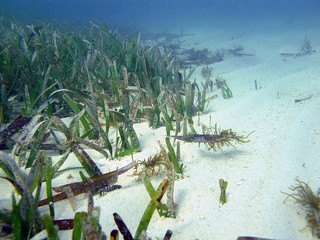
turtle grasses near Munson Rocks

The BBC reports on research pointing to the importance of seagrasses to protecting coral reefs against the impacts of ocean acidification, caused by carbon dioxide from fossil fuel emissions dissolving in seawater, causing unprecedented increases in the ocean’s acidity.

Dr. Richard Unsworth of Swansea University, along with a team of scientists from Oxford University and James Cook University in Australia, found several types of seagrass which may reduce the acidity of water around reefs, protecting them from erosion from acidifying seas.

The survival of these corals has been threatened by carbon dioxide in the atmosphere over the last 40 years, as it has raised the acidity of the oceans, rotting the reefs in the same way as fruit and fizzy drinks can erode tooth enamel.

But now Dr Unsworth believes he has found varieties of seagrass which can photosynthesise carbon dioxide so quickly and efficiently that they actually turn the surrounding water more alkaline.

“Highly productive tropical seagrasses often live adjacent to or among coral reefs and photosynthesise at such rates you can see the oxygen they produce practically bubbling away,” he said.

“We wanted to understand whether this could be a major local influence on seawater and the problems of ocean acidification.”

Read the full story at BBC

Seagrasses actually pack a double-punch against the effects of carbon dioxide. Research in Nature Geoscience finds that coastal seagrass has the potential to be vital carbon sinks and therefore part of the solution to climate change. Blue Climate Solutions, a project of The Ocean Foundation, is working to promote a concept recently termed ‘Blue Carbon.’ They seek to mitigate climate change by advancing policies that promote the roles coastal and ocean ecosystems play as natural carbon sinks, including the conservation of ecosystems such as seagrass meadows, mangrove swamps, and salt marshes.

More Reading:

  • Seagrasses can store as much carbon as forests | Science Wire …
  • Study: Seagrass can combat climate change – AUPlurk
  • GeoGarage: Seagrasses store as much carbon as forests
Tags: blue carbon, climate change, coral reefs, ocean acidification, Seagrass
Share this entry
  • Share on Facebook
  • Share on X
  • Share on WhatsApp
  • Share by Mail
https://oceandoctor.org/wp-content/uploads/2012/06/4525658481_0f91daab6e_n.jpg 240 320 Ocean Doctor https://oceandoctor.org/wp-content/uploads/2015/04/Ocean-Doctor-Logo_w340.png Ocean Doctor2012-06-30 09:02:002013-01-11 20:37:41Seagrass Protects Coral Reefs from Ocean Acidification
You might also like
20YearsinCuba My 20 Years in Cuba
President Fidel Castro and Captain Jacques-Yves Cousteau in a playful exchange at the Rio Earth Summit in 1992 How Castro and Cousteau’s Legendary Friendship Preserved Cuba’s Oceans
Ira Flatow, host of PRI's "Science Friday" and Ocean Doctor president, Dr. David E. Guggenheim, at the CUNY studios in New York Listen: Ocean Doctor on Science Friday: Conserving Cuba’s Coral Reefs
The clownish grin of a bridled parrotfish reveals its power tools: grinding teeth used to scrape algae from rock. Though sometimes destructive to individual corals, the fish's efforts are mostly beneficial. Without them, algal growth could smother the reef. Scarus frenatus (Photo: David Doubilet/National Geographic) A Fragile Empire: National Geographic Examines Threats to Australia’s Great Barrier Reef
Cuban Embassy Opens in DC After 54 Years: Will Cuba Remain the ‘Green Jewel’ of the Caribbean?
Acid Oceans: The Gravest and Most Immediate Planetary Threat Yet?
0 replies

Leave a Reply

Want to join the discussion?
Feel free to contribute!

Leave a Reply Cancel reply

You must be logged in to post a comment.

Make a Difference

See Us On:

Book a Speaker!

Book Dr. David E. Guggenheim, the

Subscribe to Our Newsletter

* indicates required
Phone: +1 (202) 695-2476
Fax: +1 (202) 888-3329
Mailing Address:
P.O. Box 53090
Washington, DC 20009

Just Released: The Remarkable Reefs of Cuba: Stories of Hope from the Ocean Doctor by Dr. David E. Guggenheim, President of Ocean Doctor

© Copyright - Ocean Doctor
  • Link to X
  • Link to Facebook
  • Link to LinkedIn
  • Link to Youtube
  • Link to Instagram
  • Link to Pinterest
  • Link to Rss this site
Link to: Saving the Oceans from Acidification Starts With an End to Fossil Fuel Subsidies Link to: Saving the Oceans from Acidification Starts With an End to Fossil Fuel Subsidies Saving the Oceans from Acidification Starts With an End to Fossil Fuel Subs... Link to: Emperor Penguins Disappearing Due to Climate Change Link to: Emperor Penguins Disappearing Due to Climate Change Emperor Penguins Disappearing Due to Climate Change
Scroll to top Scroll to top Scroll to top