
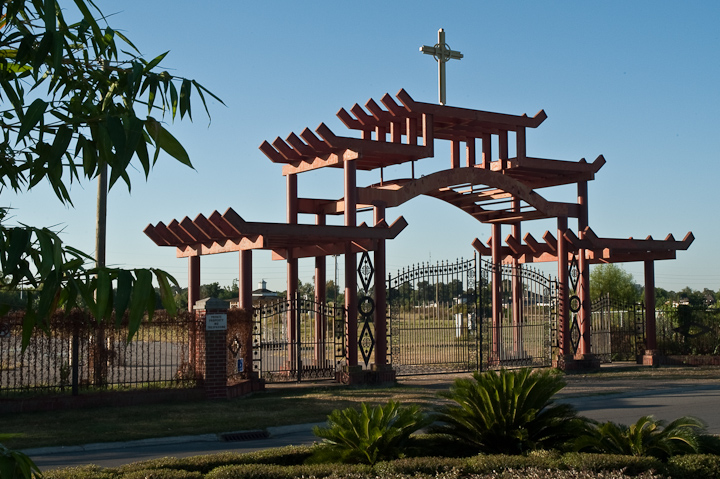
The War, The Exodus, The Hurricane, The Oil Spill: One Gulf Community’s Determination to Endure (Part 2)
November 22, 2010: CONCLUSION: Village de l’Est, known locally as “Versailles” in New Orleans East, holds the highest concentration of Vietnamese outside of Vietnam. Settled in 1975 by Vietnamese refugees when Saigon fell to the Communists, the community’s residents bought boats and have fished the Gulf of Mexico — 80 percent of the community is dependent on fishing and the fishing industry. But in 2005, Hurricane Katrina nearly wiped the community off the map. Still recovering from that disaster, the BP oil spill now leaves the future of fishing uncertain in the Gulf. Now, in a partnership with The Ocean Foundation, the community is looking at next-generation land-based fish farming as a solution. Join The Ocean Doctor in a visit to this unique community that is determined to do whatever it takes to endure.
The Ocean Doctor airs weekly on WebTalkRadio.net. Want to listen on your iPod, iPhone or mp3 player? Download the mp3 file or subscribe on iTunes and don’t miss a single episode. See the complete list of episodes.
Submit a question and I’ll try to answer it on the air. Even better, record your question or comment on our special message line and I might play it on the air. Call: (805) 619-9194. You can also leave questions and comments for this episode below.
Like the show? Learn how to become a sponsor.
Podcast: Play in new window | Download
This Week: The Gulf’s Green Future and the Vietnamese Community of New Orleans East
The Vietnamese Community in New Orleans East has the highest concentration of Vietnamese outside of Vietnam
One of the hardest-hit communities by Hurricane Katrina and the BP Gulf of Mexico oil spill is again demonstrating its exceptional determination not only to survive, but to breathe new economic life into its community while establishing itself as a visionary leader in green business and technology. And all the while, the community continues to strengthen its cultural heritage. Its vision: The Viet Village Urban Farm Sustainable Aquaculture Park, a project that will bring green jobs and a vibrant business model to the region while offering a sustainable alternative to fishing wild stocks and environmentally unfriendly forms of fish farming/aquaculture.
New Orleans East (NOE) is a largely Vietnamese-American community located in the wetlands of Louisiana approximately 10 miles from downtown New Orleans. NOE families lost their homes, their jobs and indeed, their entire community support system following Hurricane Katrina and the needs among NOE communities remain significant. Five years after the storm, many homes remain vacant and more than 40 percent of NOE’s residents never returned. The Village de l’Est neighborhood in NOE is a community comprised of Vietnamese Americans (about 58 percent), African Americans (34 percent), Latino Americans (7 percent), and non-Hispanic Whites (less than 1 percent). This is a particularly vulnerable population, as 26 percent of the population lives below the poverty level and 40.6 percent are renters of temporary housing. Nearly 90% of Village de l’Est residents have returned to the community following Hurricane Katrina.
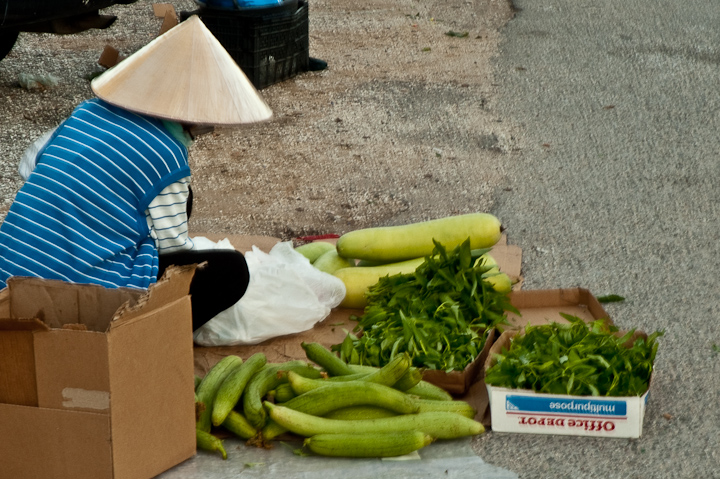
The “Squatting Market” in Versailles, New Orleans East
The timing of the BP oil spill disaster has been devastating to the this community as it is still tenuously recovering from the impacts of Katrina. In addition, the announced closures of the NASA Assembly plant in NOE and the Avondale Shipyard in south Louisiana, and the ongoing moratorium on deepwater drilling have had significant impacts on employment.
There are 40,000 Vietnamese living and working in Louisiana, Mississippi, and Alabama, and one in three work in the seafood industry. Vietnamese and Southeast Asian fisherman make up one-third of all shrimping vessels in the Gulf Coast. Many also work catching oysters, crabs and packaging seafood. The closure of nearly one-third of federal waters to fishing in the Gulf of Mexico due to the BP oil spill disaster has already had a devastating economic impact on the New Orleans East fishing and seafood services communities. Even as fishing closures are lifted, there is growing concern that the unprecedented level of use of dispersants in the Gulf has resulted in a massive infiltration of toxic substances into the marine food chain. The safety of seafood in the Gulf of Mexico may remain in question for many years, and the viability of the region’s seafood industry is now in question.

Former fisher and fishing industry worker, Sy Tran (left) addresses the group
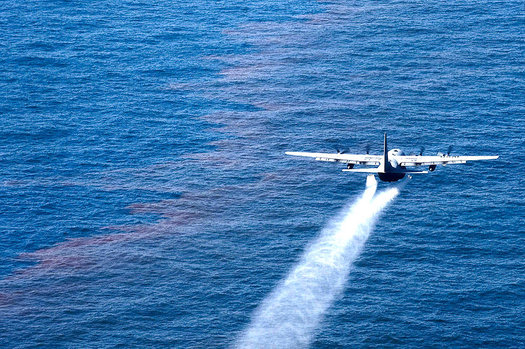
In addition, oil and dispersants have directly killed numerous fish and other species and may have increased the size of the anoxic ?dead zone? in the Gulf. Thus, even if claims that chemicals in dispersants do not constitute a threat to seafood safety are true, impacts to the Gulf’s productivity may have long-lasting consequences to commercial fishing.
There is increasing recognition that sustainable aquaculture can play a key role in the transition toward safer, more environmentally and economically sustainable seafood production, offering a viable, safe and sustainable alternative to fishing wild stocks and one that can bring strong economic benefits. Land-based, next-generation recirculating aquaculture systems (RAS) offer a unique combination of conservation achievements, socioeconomic benefits, and potential for scalability. Such technology could lead the way toward a revolutionary transition of fish production.
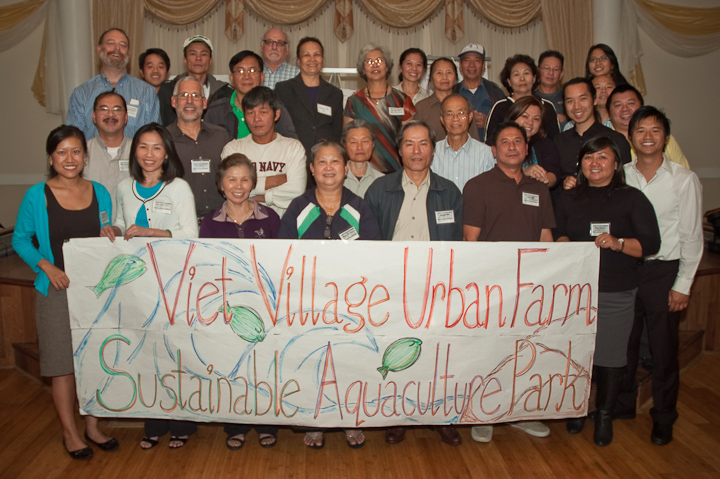
Group photo following the 2-day sustainable aquaculture workshop
A land-based, sustainable aquaculture industry for NOE is envisioned as a component of the community’s proposed Viet Village Urban Farm project and as such, represents an investment in a long-term, profitable, sustainable and green-job-creating industry with significant environmental benefits. In addition, because RAS technology remains under-commercialized in the United States, the Viet Village Urban Farm Sustainable Aquaculture Park has the opportunity to serve as a national aquaculture hub and training center, as a showcase not only of next-generation aquaculture technology, but also of the business model and community-level benefits.
Additional Resources:
- “The Gulf’s Green Future: One Community’s Hopeful Example After the BP Spill & Katrina” (1planet1ocean)
- What is Next-Generation Aquaculture? (Aquaculture Developments)
- Mary Queen of Viet Nam Community Development Corporation
Please Support This Important Project
Please help us create a new future for the Gulf and its communities.Your tax-deductible contribution will result in hands-on work that will directly benefit the Gulf of Mexico and the New Orleans East community. |
|---|

 Ocean Doctor is a 501(c)(3) nonprofit organization. Your donation is secure and tax-deductible in the U.S. |

Leave a Reply
Want to join the discussion?Feel free to contribute!