• Link to X
  • Link to Facebook
  • Link to LinkedIn
  • Link to Youtube
  • Link to Instagram
  • Link to Pinterest
  • Link to Rss this site
Ocean Doctor
  • About
    • About Us
    • History
    • Board of Directors
      • Dr. Sylvia A. Earle
      • Adam Ravetch
      • Robert Frank
      • Advisory Council
    • Our Team
      • Dr. David E. Guggenheim – President
      • Mary Kadzielski – Program Consultant
      • Sophia Marencik – Conservation Policy Intern
      • Taylor Gordon – Intern
      • Cassidy Haney – Intern
      • Christina Riemer – Intern
      • MJ Hendren – Intern
    • Press
      • Ocean Doctor in the News
      • Media Kit
      • Press Releases
    • Contact
      • Contact Us
      • Submit a Question About Our Cuba Travel Program
      • Subscribe to Our Newsletter
      • Social Media
  • Our Work
    • Cuba Conservancy Program
      • About
      • Considering the Economic Value of Cuba’s Natural Ecosystems
      • Project “Red Alerta”
      • CUSP – The Cuba-U.S. Sustainability Partnership
      • Cuba Environmental Film Festival
      • Cuba Educational Travel
      • Animal Rescue in Cuba
      • More…
    • 50 States Expedition
      • About
      • Adopt a State!
      • Articles
    • Penguin Conservation
      • About
      • Our Film: Disaster at Nightingale
      • Articles
    • Animal Rescue in Cuba
    • More…
      • Protecting the Bering Sea Canyons
      • Sustainable Aquaculture
      • Expeditions
        • Cape to Cape Expedition
          • Articles
          • Track
        • Bering Sea Expedition
          • Articles
          • Track
        • The Ocean Doctor Radio Show
          • Listen Now
          • Subscribe with iTunes
  • News
    • Featured
    • Ocean Doctor in the News
    • Ocean Doctor’s Reflections
    • Action Alerts
    • The Ocean Doctor Radio Show
  • Events
    • Upcoming Events
    • Events Calendar
    • Past Events
    • Book a Speaker for Your Event
  • Travel With Us
    • Travel Opportunities
    • Registration
  • Book a SpeakerDr. David E. Guggenheim is a marine scientist, ocean explorer, submarine pilot, and conservation policy leader based in Washington, DC at The Ocean Foundation where he serves as Senior Fellow and Director of its Cuba Marine Research and Conservation Program. He also hosts The Ocean Doctor Radio Show. Dr. Guggenheim was inducted into the Explorers Club as a National Fellow in 2008. An accomplished public speaker, Dr. Guggenheim offers a unique perspective ? from a tiny submarine 2,000 feet beneath Alaska’s Bering Sea to the hallways of Washington, DC ? on the wonder of the oceans around us and the critical issues they now face. In early 2009, Dr. Guggenheim embarked on a special ?expedition? to deliver speeches to tens of thousands of students in all 50 U.S. states, the Ocean Doctor’s ?50 Years ? 50 States ? 50 Speeches? Expedition. In Washington, DC, Dr. Guggenheim is a leader in conservation policy, on important issues including global warming, coral reefs, sustainable seafood, and environmental education and is actively involved in international environmental issues. Read Dr. Guggenheim’s full biography? ? Dr. Guggenheim is a regular spokesperson on ocean issues and has been featured on ABC’s Good Morning America, CNN, MSNBC, BBC,?
  • Support Us
    • Make a Donation
    • Ocean Doctor Gear
  • Click to open the search input field Click to open the search input field Search
  • Menu Menu
Blog - Latest News
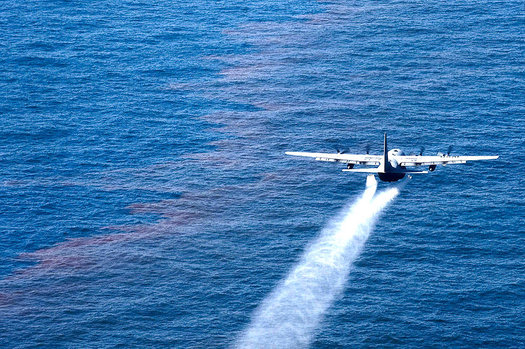
A C-130 Applies Dispersants During the BP Deepwater Horizon Oil Spill (USCG Photo)

Dolphin Deaths in Gulf of Mexico – “Perfect Storm” of BP Oil Spill and Cold Water

July 23, 2012/in Ocean Newswire/by Ocean Doctor
A C-130 Applies Dispersants During the BP Deepwater Horizon Oil Spill (USCG Photo)

A C-130 Applies Dispersants During the BP Deepwater Horizon Oil Spill (USCG Photo)

In a study published in PLos ONE, investigators studied a large die-off of dolphins in the Northern Gulf of Mexico. During the first four months of 2011, 186 bottlenose dolphins, 86 of which were very young perinatal calves, washed ashore from Louisiana to western Florida. For perinatal dolphins, this stranding rate was nearly 6 times higher than the average number of perinatal strandings in the region during the previous 8 years and nearly twice the historical percentage of total strandings. These dolphin deaths represent the largest marine mammal mortality event in the Northern Gulf of Mexico since 2004, when a red tide killed more than 100 bottlenose dolphins off the Florida panhandle.

What killed so many dolphins? Investigators point to a “perfect storm” of dolphins weakened by the BP oil spill, then killed by colder-than-normal water in the Gulf that took its toll on a vulnerable dolphin population.

The investigators point to to studies of other marine mammals that have shown that a combination of exposure to contaminants and sustained cold could lead to mortailty of top predators such as dolphins, sea lions and others.

We propose the possibility that an extreme cold and freshwater event centered on the Mobile Bay watershed in early 2011 contributed to the location and frequency distribution of perinatal strandings among bottlenose dolphins along the nGOM [Northern Gulf of Mexico] coast in early 2011. Our data suggest cold temperatures were not the sole cause of death, but raise the possibility that the Mobile Bay freshet and corresponding regional temperature depressions were a culminating stressor to a bottlenose dolphin population that was already under stress or in relatively poor body condition (such as due to compromised food resources and bacterial infection). …More at Were Multiple Stressors a ?Perfect Storm? for Northern Gulf of Mexico Bottlenose Dolphins (Tursiops truncatus) in 2011? (PLos ONE)
Tags: bp deepwater horizon, bp oil spill, dolphins, Gulf of Mexico
Share this entry
  • Share on Facebook
  • Share on X
  • Share on WhatsApp
  • Share by Mail
https://oceandoctor.org/wp-content/uploads/2012/07/dispersants-bp-oil-spill-uscg.jpg 349 525 Ocean Doctor https://oceandoctor.org/wp-content/uploads/2015/04/Ocean-Doctor-Logo_w340.png Ocean Doctor2012-07-23 13:41:082013-01-09 21:59:04Dolphin Deaths in Gulf of Mexico – “Perfect Storm” of BP Oil Spill and Cold Water
You might also like
Learn how you can reduce your plastic waste from bottled water while saving money What Everyone Should Know About Bottled Water
Trinational Initiative Cuba and the U.S. Find Friendship and Hope in the Gulf of Mexico
Cuba Wide-Eyed in Cuba’s Jurassic Park
David Helvarg Disaster, Dispersants & Deception in the Gulf of Mexico
Want to Help the Gulf of Mexico? Kill Your Lawn. Want to Help the Gulf of Mexico? Kill Your Lawn.
Want to Help the Gulf of Mexico? Kill Your Lawn. Do We Dare Drill Beneath Arctic Seas?
0 replies

Leave a Reply

Want to join the discussion?
Feel free to contribute!

Leave a Reply Cancel reply

You must be logged in to post a comment.

Make a Difference

See Us On:

Book a Speaker!

Book Dr. David E. Guggenheim, the

Subscribe to Our Newsletter

* indicates required
Phone: +1 (202) 695-2476
Fax: +1 (202) 888-3329
Mailing Address:
P.O. Box 53090
Washington, DC 20009

Just Released: The Remarkable Reefs of Cuba: Stories of Hope from the Ocean Doctor by Dr. David E. Guggenheim, President of Ocean Doctor

© Copyright - Ocean Doctor
  • Link to X
  • Link to Facebook
  • Link to LinkedIn
  • Link to Youtube
  • Link to Instagram
  • Link to Pinterest
  • Link to Rss this site
Link to: Fertilizing the Oceans with Iron Sinks Carbon, But is it a Good Idea? Link to: Fertilizing the Oceans with Iron Sinks Carbon, But is it a Good Idea? Fertilizing the Oceans with Iron Sinks Carbon, But is it a Good Idea? Link to: Where Mercury in Fish Comes From and What Regulators are Doing About it Link to: Where Mercury in Fish Comes From and What Regulators are Doing About it Where Mercury in Fish Comes From and What Regulators are Doing About it
Scroll to top Scroll to top Scroll to top