• Link to X
  • Link to Facebook
  • Link to LinkedIn
  • Link to Youtube
  • Link to Instagram
  • Link to Pinterest
  • Link to Rss this site
Ocean Doctor
  • About
    • About Us
    • History
    • Board of Directors
      • Dr. Sylvia A. Earle
      • Adam Ravetch
      • Robert Frank
      • Advisory Council
    • Our Team
      • Dr. David E. Guggenheim – President
      • Mary Kadzielski – Program Consultant
      • Sophia Marencik – Conservation Policy Intern
      • Taylor Gordon – Intern
      • Cassidy Haney – Intern
      • Christina Riemer – Intern
      • MJ Hendren – Intern
    • Press
      • Ocean Doctor in the News
      • Media Kit
      • Press Releases
    • Contact
      • Contact Us
      • Submit a Question About Our Cuba Travel Program
      • Subscribe to Our Newsletter
      • Social Media
  • Our Work
    • Cuba Conservancy Program
      • About
      • Considering the Economic Value of Cuba’s Natural Ecosystems
      • Project “Red Alerta”
      • CUSP – The Cuba-U.S. Sustainability Partnership
      • Cuba Environmental Film Festival
      • Cuba Educational Travel
      • Animal Rescue in Cuba
      • More…
    • 50 States Expedition
      • About
      • Adopt a State!
      • Articles
    • Penguin Conservation
      • About
      • Our Film: Disaster at Nightingale
      • Articles
    • Animal Rescue in Cuba
    • More…
      • Protecting the Bering Sea Canyons
      • Sustainable Aquaculture
      • Expeditions
        • Cape to Cape Expedition
          • Articles
          • Track
        • Bering Sea Expedition
          • Articles
          • Track
        • The Ocean Doctor Radio Show
          • Listen Now
          • Subscribe with iTunes
  • News
    • Featured
    • Ocean Doctor in the News
    • Ocean Doctor’s Reflections
    • Action Alerts
    • The Ocean Doctor Radio Show
  • Events
    • Upcoming Events
    • Events Calendar
    • Past Events
    • Book a Speaker for Your Event
  • Travel With Us
    • Travel Opportunities
    • Registration
  • Book a SpeakerDr. David E. Guggenheim is a marine scientist, ocean explorer, submarine pilot, and conservation policy leader based in Washington, DC at The Ocean Foundation where he serves as Senior Fellow and Director of its Cuba Marine Research and Conservation Program. He also hosts The Ocean Doctor Radio Show. Dr. Guggenheim was inducted into the Explorers Club as a National Fellow in 2008. An accomplished public speaker, Dr. Guggenheim offers a unique perspective ? from a tiny submarine 2,000 feet beneath Alaska’s Bering Sea to the hallways of Washington, DC ? on the wonder of the oceans around us and the critical issues they now face. In early 2009, Dr. Guggenheim embarked on a special ?expedition? to deliver speeches to tens of thousands of students in all 50 U.S. states, the Ocean Doctor’s ?50 Years ? 50 States ? 50 Speeches? Expedition. In Washington, DC, Dr. Guggenheim is a leader in conservation policy, on important issues including global warming, coral reefs, sustainable seafood, and environmental education and is actively involved in international environmental issues. Read Dr. Guggenheim’s full biography? ? Dr. Guggenheim is a regular spokesperson on ocean issues and has been featured on ABC’s Good Morning America, CNN, MSNBC, BBC,?
  • Support Us
    • Make a Donation
    • Ocean Doctor Gear
  • Click to open the search input field Click to open the search input field Search
  • Menu Menu

Archive for category: News

Aquarius — World’s Last Undersea Lab — Loses Funding, Faces Decommisioning

July 17, 2012/in Featured, Ocean Newswire/by Ocean Doctor
Aquarius Reef Base

Aquarius Reef Base (Photo: NOAA)

For 25 years, the Aquarius Reef Base, an undersea laboratory that sleeps six?off of Key Largo, has served as host to numerous marine biologists and NASA astronauts. Even the Ocean Doctor has paid a visit to Aquarius. But after years of declining budgets, the Obama administration has eliminated the base’s funding, and the world’s last remaining undersea lab is faced with decommissioning — or finding its own funding. NPR reports that Dr. Sylvia Earle and other researchers are now conducting a mission of outreach and education in Aquarius to help save it.

Read more

https://oceandoctor.org/wp-content/uploads/2012/07/nur08033_w600.jpg 396 600 Ocean Doctor https://oceandoctor.org/wp-content/uploads/2015/04/Ocean-Doctor-Logo_w340.png Ocean Doctor2012-07-17 20:00:002013-01-09 23:33:20Aquarius — World’s Last Undersea Lab — Loses Funding, Faces Decommisioning

Judge Approves $880 Million Everglades Restoration

July 15, 2012/in Ocean Newswire/by Ocean Doctor
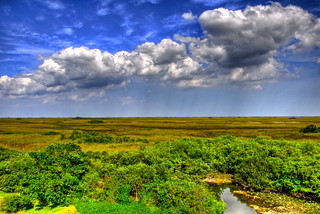
Everglades National Park

The Everglades (Photo: slack12 via Flickr)

The Environmental News Network (ENN) reports that a federal judge has approved an $880 million plan to restore the Everglades, a decision that could result in the settlement of numerous lawsuits spanning 25 years. In addition, U.S. Agriculture Secretary Tom Vilsack visited Kissimmee, Florida to announce an infusino of an additional $80 million from the federal government to support farmers and ranchers who voluntarily conserve wetlands on agricultural land in the northern portion of the Everglades Ecosystem. Read more

https://oceandoctor.org/wp-content/uploads/2012/07/everglades.jpg 214 320 Ocean Doctor https://oceandoctor.org/wp-content/uploads/2015/04/Ocean-Doctor-Logo_w340.png Ocean Doctor2012-07-15 20:00:002012-07-16 17:55:50Judge Approves $880 Million Everglades Restoration

Plastic Pollution Could Promote Interbreeding, Reduce Biodiversity

July 12, 2012/in Ocean Newswire/by Ocean Doctor


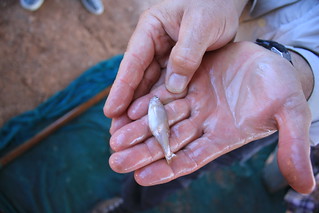
Red Shiner

Exposure to Bisphenol A (BPA) from plastic pollution could accelerate interbreeding of native species with exotic species, like the red shiner (pictured). (Image by TimeScience via Flickr)

An article in Evolutionary Applications raises concerns about the impacts of plastics in aquatic environments. It has already been well-documented that Bisphenol A (BPA) affects animal development and behavior because it mimics the hormone estrogen. Consequences can include impairing the ability of males to produce offspring. New Scientist reports that the new study, led by Jessica Ward of the University of Minnesota in Saint Paul, demonstrates effects that have further consequences with serious implications for biodiversity.


Fish exposed to BPA were more likely than the unexposed fish to approach fish of the other species and court them.

Red shiners are an invasive species, often introduced to new areas by fishermen who use them as bait. They often hybridise with native species, and exposure to oestrogen-mimicking chemicals like BPA could make it even more likely that they would do so.

Although it has a lower profile than habitat loss and overhunting, interbreeding is a big threat to biodiversity. “Hybridisation is one of the most common and widespread causes of species loss, especially in fish,” Ward says.

…More at Plastic ingredient makes fish court other species (New Scientist)

The U.S. Food and Drug Administration rejected calls to ban BPA from all plastic food containers earlier this year.

https://oceandoctor.org/wp-content/uploads/2012/07/5115451381_9219747956_n.jpg 213 320 Ocean Doctor https://oceandoctor.org/wp-content/uploads/2015/04/Ocean-Doctor-Logo_w340.png Ocean Doctor2012-07-12 12:08:002013-01-09 23:40:04Plastic Pollution Could Promote Interbreeding, Reduce Biodiversity

Where Sea Turtles and Fishing Boats Meet

July 11, 2012/in Ocean Newswire/by Ocean Doctor
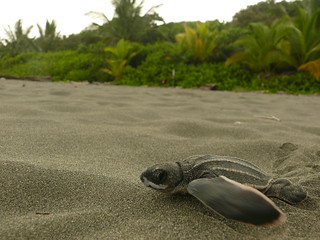
Baula en el Caribe

A leatherback sea turtle hatchling makes its way to the sea (Image by Jual via Flickr)

A study published in the April 2012 issue of Ecological Applications uses satellite telemetry data to identify danger zones where sea turtles and fishing trawlers intersect at sea — with deadly consequences. The insights provided by the study will assist regulatory agencies determine limits to fishing, such as seasonal closures, to protect sea turtles, all seven species of which are considered endangered.


The researchers followed 135 females, some from the eastern Pacific and some from the western Pacific, over 15 years as they crisscrossed the ocean hunting for jellyfish. The study found that the migration patterns for the two Pacific populations were different. Western Pacific leatherbacks leave Indonesian nesting sites to feed in the South China Sea, Indonesian seas and southeastern Australia and along the U.S. West Coast, making them vulnerable to fishing nets in many different areas.

The eastern Pacific leatherbacks traveled from nesting sites in Mexico and Costa Rica to the southeastern Pacific, with many getting snagged in fishing gear along the coast of South America. Because the eastern population is more concentrated in range, its risk of extinction is greater, Bailey says.

The new findings could help decision makers plan short-term fishery closures. Bailey credits a recent decision to close a swordfish and thresher shark fishery in California from mid-August to mid-November each year with dramatically reducing leatherback bycatches. (In 2010 no turtles were caught.)

…Read the full story at A satellite study pinpoints danger zone where leatherbacks and fishing trawlers meet. (Scientific American)

https://oceandoctor.org/wp-content/uploads/2012/07/2804866988_e783a49dcd_n.jpg 240 320 Ocean Doctor https://oceandoctor.org/wp-content/uploads/2015/04/Ocean-Doctor-Logo_w340.png Ocean Doctor2012-07-11 10:00:002013-01-10 22:22:12Where Sea Turtles and Fishing Boats Meet

Rapid Rise of Ocean Acidity Surprises Scientists

July 10, 2012/in Ocean Newswire/by Ocean Doctor
Helpful

The speed with which acid levels have risen in the oceans has “caught scientists off-guard.” (Image by B Tal via Flickr)

The Christian Science Monitor reports that the speed with which acid levels have risen in the oceans has “caught scientists off-guard.” Ocean acidification was recently described by National Oceanic and Atmospheric Administration (NOAA) Administrator Jane Lubchenco as climate change’s “equally evil twin,” representing one of the biggest threats to life in the oceans. Lubchenco warned that acidification amounts to “osteoporosis of the sea” and threatens coral reefs, food security, and tourism around the world.


Scientists initially assumed that the carbon dioxide absorbed by the water would be sufficiently diluted as the oceans?mixed shallow and deeper waters. But most of the carbon dioxide and the subsequent chemical changes are being concentrated in surface waters, Lubchenco said.

“And those surface waters are changing much more rapidly than initial calculations have suggested,” she said. “It’s yet another reason to be very seriously concerned about the amount of carbon dioxide that is in the atmosphere now and the additional amount we continue to put out.”

Higher acidity levels are especially problematic for creatures such as oysters, because acid slows the growth of their shells. Experiments have shown other animals, such as clown fish, also suffer. In a study that mimicked the level of acidity scientists expect by the end of the century, clown fish began swimming toward predators, instead of away from them, because their sense of smell had been dulled.

…Read the full story at Ocean acidity increases surprise researchers – Christian Science Monitor

https://oceandoctor.org/wp-content/uploads/2012/07/202535212_3dbc9c42f3_n.jpg 213 320 Ocean Doctor https://oceandoctor.org/wp-content/uploads/2015/04/Ocean-Doctor-Logo_w340.png Ocean Doctor2012-07-10 20:00:002013-01-10 22:26:20Rapid Rise of Ocean Acidity Surprises Scientists

Coral Reefs Collapsed, then Recovered After 2,500 Years

July 10, 2012/in Ocean Newswire/by Ocean Doctor
Encouraging or Saddening?

Image by nashworld via Flickr

In a study led by Lauren T. Toth at Florida Institute of Technology published in the journal, Science, coral reef ecosystems in the tropical eastern Pacific “collapsed for 2500 years, representing as much as 40% of their history, beginning about 4000 years ago.” A series of powerful El Nino events, which include periods of significantly warmer ocean temperature every three to seven years, coincided with the 2,500-year period of coral decline. This was followed by a cycle of La Nina events characterized by much cooler water, beginning 3,200 to 3,800 years ago. Corals recovered during the millenia since but now face a return to extreme weather conditions like those that wiped them out, due to climate change impacts. Read more

https://oceandoctor.org/wp-content/uploads/2012/07/acropora-palmata-elkhorn-coral.jpg 2552 3402 Ocean Doctor https://oceandoctor.org/wp-content/uploads/2015/04/Ocean-Doctor-Logo_w340.png Ocean Doctor2012-07-10 11:00:002013-01-10 22:32:52Coral Reefs Collapsed, then Recovered After 2,500 Years

Sea Level Rise Now Believed Impossible to Prevent

July 9, 2012/in Featured, Ocean Newswire/by Ocean Doctor
Caloosahatchee River at Gulf of Mexico, Southwest Florida (Photo by Whitney Gray, Florida Sea Grant)

Caloosahatchee River at Gulf of Mexico, Southwest Florida (Photo by Whitney Gray, Florida Sea Grant)

The Journal Nature reports that, despite our best efforts to reduce fossil fuel emissions, sea level rise associated with climate change is unstoppable, even under the most aggressive actions on greenhouse gas mitigation. According to the study, the question now is not if sea level rise will continue but to what degree. And that’s the good news. Without concerted mitigation strategies, scientists predict that future sea level rise would be substantial and continue to rise for centuries to come.


Read more

https://oceandoctor.org/wp-content/uploads/2012/07/7466909704_f83756b2ba.jpg 373 500 Ocean Doctor https://oceandoctor.org/wp-content/uploads/2015/04/Ocean-Doctor-Logo_w340.png Ocean Doctor2012-07-09 11:37:192013-01-10 22:37:39Sea Level Rise Now Believed Impossible to Prevent

World’s Largest Animals, Blue Whales, Threatened by Strikes from Ships

July 6, 2012/in Ocean Newswire/by Ocean Doctor
Great Whales Near the Farallones, California Coast (Photo by Dan Shapiro, Courtesy of NOAA)

Great Whales Near the Farallones, California Coast (Photo by Dan Shapiro, Courtesy of NOAA)

Whale populations, still recovering from centuries of hunting, continue to face a myriad of threats. But it’s often a surprise that one of the leading causes of death among whales around the globe is ship strikes. Now researchers are concerned that blue whales — the largest animals that have ever lived on the planet — are especially vulnerable to ship strikes in the Indian Ocean, according to the New York Times:


Read more

https://oceandoctor.org/wp-content/uploads/2012/07/sanc0112.jpg 1184 1740 Ocean Doctor https://oceandoctor.org/wp-content/uploads/2015/04/Ocean-Doctor-Logo_w340.png Ocean Doctor2012-07-06 12:00:002013-01-10 22:43:28World’s Largest Animals, Blue Whales, Threatened by Strikes from Ships

China to Ban Shark Fin Soup at Official Banquets

July 5, 2012/in Ocean Newswire/by Ocean Doctor
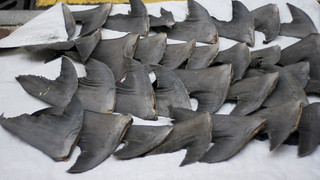
Fresh shark fins drying on sidewalk

Shark fins drying on a sidewalk. (Image by cloneofsnake via Flickr)

CNN reports that China is planning to ban shark fin soup from official banquets. Shark fin soup is widely served in restaurants in Chinese communities worldwide and traditionally served at weddings.


Read more

https://oceandoctor.org/wp-content/uploads/2012/07/6191090547_d107e1a3a8_n.jpg 180 320 Ocean Doctor https://oceandoctor.org/wp-content/uploads/2015/04/Ocean-Doctor-Logo_w340.png Ocean Doctor2012-07-05 09:20:002013-01-10 22:50:15China to Ban Shark Fin Soup at Official Banquets

Hot Time at the Beach a Threat to Sea Turtles

July 5, 2012/in Ocean Newswire/by Ocean Doctor
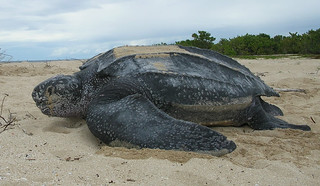
Leatherback sea turtle/ Tinglar, USVI

Leatherback Sea Turtle in the U.S. Virgin Islands (Image by USFWS/Southeast via Flickr)

Already the most critically endangered of all sea turtle species thanks to poaching and fishing impacts, new research led by Dr. Vincent Saba, a research fishery biologist with the NOAA National Marine Fisheries Service Northeast Fisheries Science Center, suggests that climate change could impede leatherback sea turtles’ ability to recover. Read more

https://oceandoctor.org/wp-content/uploads/2012/07/leatherback-usvi-usfws.jpg 1085 1864 Ocean Doctor https://oceandoctor.org/wp-content/uploads/2015/04/Ocean-Doctor-Logo_w340.png Ocean Doctor2012-07-05 09:00:002013-01-10 22:53:00Hot Time at the Beach a Threat to Sea Turtles
Page 3 of 13‹12345›»

Make a Difference

See Us On:

Book a Speaker!

Book Dr. David E. Guggenheim, the

Subscribe to Our Newsletter

* indicates required
Phone: +1 (202) 695-2476
Fax: +1 (202) 888-3329
Mailing Address:
P.O. Box 53090
Washington, DC 20009

Just Released: The Remarkable Reefs of Cuba: Stories of Hope from the Ocean Doctor by Dr. David E. Guggenheim, President of Ocean Doctor

© Copyright - Ocean Doctor
  • Link to X
  • Link to Facebook
  • Link to LinkedIn
  • Link to Youtube
  • Link to Instagram
  • Link to Pinterest
  • Link to Rss this site
Scroll to top Scroll to top Scroll to top